
Center Pole Reflections: "Who Am I?"
In this blog, Randy Morris offers his thoughts on the question of “Who am I?”, archetypal patterns of human development, and how they relate to our thinking and practices at Rite of Passage Journeys. He writes, “I offer the following reflections as a step in the direction of clarifying the basic principles and assumptions that guide our work. I often refer to these assumptions as the Center Pole of Journeys. The image of the Center Pole marks where we stand most authentically as a non-profit organization and as an earth-centric community. A well built Center Pole tells us what we are, and what we are not. To articulate a Center Pole is to encourage and foster a community of learning.”
Center Pole Reflections:
“Who Am I?”
By Randy Morris, Ph.D.
“Into the same river I both step and do not step, I am and I am not.” --Heraclitus
To ask the question, “Who am I?” is to begin the long quest to understand one’s own identity, one’s place in the social world, one’s place in the natural world, and one’s purpose for living. It is an elusive question, though ancient in origin, as attested by the above quote from the Greek philosopher Heraclitus (c 500 BCE). Over 2500 years ago, people were asking how it could be true that “I” can be the same person over a life time and yet be in a constant state of flux and change. The moment I step into a river, the water that hits my foot changes every millisecond, and yet it is the same river. The cells of my body are constantly renewing themselves, and yet I am the same person over a lifetime. Who is this “I” with whom I have been in relationship my whole life? What does it want? What is its purpose? For an organization like Rite of Passage Journeys, which aims to support an eco-centric vision of human development across the life cycle, these are crucial questions. I offer the following reflections as a step in the direction of clarifying the basic principles and assumptions that guide our work. I often refer to these assumptions as the Center Pole of Journeys. The image of the Center Pole marks where we stand most authentically as a non-profit organization and as an earth-centric community. A well built Center Pole tells us what we are, and what we are not. To articulate a Center Pole is to encourage and foster a community of learning.
The mystery of constancy in the midst of change, of identity and personality, has been approached in a huge diversity of ways over the ensuing millennia. These complex images and theories of what a human being is, and how they evolve throughout a lifetime, are important for a very specific reason: what we imagine human beings to be, will limit and condition what they can become. For example, if I think that children are basically ‘bundles of desires’, units in an economic order whose purpose is to consume, work and die, then that imagination of what human beings are, will color and condition what those human beings can become, namely, consumers in a capitalist economy. Any human images that challenge or contradict that collective image will be labeled as crazy or, at best, “unpatriotic”. Clearly, it behooves us to have an expansive view of what it means to be a human being. In the history of the dominant Western world, two ways of thinking about human development emerged, two archetypal patterns of thought about the nature of the “I” and how humans change over time. (1)
One was grounded in the thinking of the French philosopher Rene Descartes (1596-1650) who said that babies are born as a tabula rasa, a ‘blank slate’, upon which experience writes its script. In this view, everyone is born equal (a pillar of democracy) but the cultural circumstances of one’s upbringing – the parents, the siblings, the economic class, the racial and ethnic context, etc. – determine the nature of one’s identity and forever fix one’s personality. The outer circumstances of our lived world act as mirrors to our inner self and we believe ourselves to be what we are told by others. The “I” is primarily composed of ‘introjects’ from the outer world of parents and community into the inner world of personal experience. In the 20th century, with the advent of psychotherapy in the first half of the century and the principles of post-modern social-constructivism in the second half, this view morphed into a position that one’s personality, while significantly shaped by the social circumstances of childhood, can be de-constructed and changed through the application of social conditioning or therapeutic techniques. In some contemporary versions of the tabula rasa, the identity that seemed so firmly set in childhood is so much in flux, so subject to the whims of changing social circumstance and therapeutic intervention, that personality is inherently unstable and a center can neither be found nor understood.
A second archetypal pattern of thought about human development emerged from the thinking of Jean-Jacques Rousseau (1712-1778). It was Rousseau who established the foundations of the Romantic movement by asserting that nature was a child’s best teacher and that the proper role of the tutor was to protect the child from harm while allowing him or her to learn nature’s lessons. Instead of emphasizing the cultural conditions that write upon the ‘blank slate’ of personality, Rousseau trusted the inborn temperamental predispositions of the child. We are born with an innate goodness, he said, though it can be warped by the social conditions of family and community. But because that goodness is always there, it can be retrieved at later stages of the life cycle.
In the 20th century, influenced by post-Darwinian ideas that human beings are evolved animals, Rousseau’s emphasis on the innate wisdom that resides in every person came to be understood in various schools of depth psychology as instinctual predispositions, what the psychologist C.G. Jung called ‘archetypes’ or innate patterns of thought, that predispose us to think and behave in certain ways even prior to our exposure to outer conditions. In Jung’s view of the collective unconscious, we can ‘know’ things that we have never directly experienced, the same way a wren knows how to build a nest without being taught. We inherit these instincts, and the wisdom that shaped them over our evolutionary history, as gifts from our ancestors. These archetypes manifest in human experience as symbols and images that generate a kind of ‘hunger’ or ‘desire’ for certain ways of being in the world. They are inborn potentials that yearn to be awakened in the outer world. (2) If that archetypal intent is blocked by outer circumstances, a neurosis forms. The frustration of archetypal intent is a major source of suffering in the human world. But it implies that there is already something there at birth, wanting to incarnate in the world. That archetypal intent contains the seeds of our mytho-poetic identity, a form of identity that is deeper than any outer social role. When fragments of our mytho-poetic identity make themselves known, they are experienced as a ‘call’ from a ‘sacred other’. (3) The images generated by this archetypal intent in our dreams and in our waking life manifest over a lifetime. Our responses to them lead us to develop ourselves with our choice-making powers the same way that an oak tree wants to develop from an acorn. (4) We experience those impulses as ‘destiny strands’, a form of ‘genetic guidance’ pushing us forward into the wholeness of our ‘true selves’. The ‘true self’ is not pre-formed in the psyche and then ‘discovered’ in its entirety at some point in the life cycle. A ‘true mytho-poetic self’ is a construct of the imagination. It develops over a life time of dialogue and inquiry into the depths of the inner and outer worlds, often manifesting near life’s end as a felt-sense of completeness, of a life well-lived in service to the web of life.
Rather than set these two archetypal patterns of human development into an opposition and arguing that one is true and the other is false, that is, rather than fall into the contemporary psychic epidemic of oppositional thinking that has so ravaged our society, let’s look to see what each has to offer our thinking and practices at Rite of Passage Journeys. After all, for them to have lasted this long, there must be some truth to each of them. Let’s generalize for the sake of understanding and refer to Descartes’ idea of the ‘blank slate’ as emphasizing the role of society in shaping the self and Rousseau’s idea of ‘inborn tendencies’ as emphasizing the role of innate instinctual factors in shaping the self. Clearly, both social and innate factors are at work in the construction of personality, but how so, in what proportion, and why is it important to differentiate these factors?
One reason it is important to be clear about these matters is that a lack of clarity can contribute to a misunderstanding of the work of Journeys. In a recent article in Aeon Magazine entitled “The Coming-Of-Age-Con,” (5) the author Cody Delistraty lays out a case that organizations like Journeys are ‘monetizing’ a vague sense that youth can ‘find themselves’ while on one of our trips. (6) He directly quotes the ROPJ website where it says, “We help initiates create the story of who they are and the kind of life they want to build based within the exploration of their own personal values.” In response to this website description of our work, Delistraty writes, “Why should one have to go through a whole childhood of experience and challenges in order to find oneself when a week at camp can help one find it immediately? When viewed in this kind of cynical, exploitive light, the notion of ‘finding oneself’ starts to look even less natural than before. And while contemporary psychology mostly says that there is no singular self, our shifting selves all seem intent on completing one task: exploiting their own development.” Delistraty’s main point seems to be that one can’t find ‘who you really are’ because the whole idea of a ‘true self’ is a complete fabrication.
Let us set aside the author’s snide comment that a week at camp is sufficient to find one’s ‘true self’, when in fact it takes a lifetime of diligent effort. When Delistraty writes that “contemporary psychology mostly says that there is no single self…”, he is saying two things. First, he is emphasizing tabula rasa psychological theories that emphasize the social factors of human identity. (7) The main goal of this view is integration into society, no matter how dysfunctional that society may be. And second, he is advancing a theory of human nature that makes it impossible to turn inward to the wisdom of our archetypal nature and discover there an inborn mytho-poetic identity. Instead, Delistraty seems to celebrate that his way to ‘come of age’ is liberating in its ‘chaotic freedom’. He writes in his conclusion, “Life is a wave of events. As such, you don’t come of age, you just age. Adulthood is only a function of time, in which case, to come of age is merely to live long enough to do so.”
Remember: every theory of human nature limits and conditions what human beings can become. A theory of human nature like the one championed by Delistraty cannot and will not discover a sense of destiny in the biographical events of childhood and adolescence because it doesn’t believe it possible. It is a theory with no depth, no soul and no foundation on which to build a life of meaning and purpose in service to the web of life. In his view, one simply grows older over time.
So how might we view both social and innate factors in a positive light? Under what circumstances should we foreground one of these factors and background the other, and vice versa? A good answer to these questions can be found in the eco-centric developmental theory of Bill Plotkin. Author and Soul Guide Bill Plotkin has been honored by Rite of Passage Journeys as a recipient of the Fred Lanphear Earth Elder Award for his contributions to our understanding of the Journeys Center Pole. He has written a number of books, but the ones most relevant to developmental theory are Nature and the Human Soul: Cultivating Wholeness and Community in a Fragmented World (2008) and The Journey of Soul Initiation: A Field Guide for Visionaries, Evolutionaries and Revolutionaries (2021). In Plotkin’s eight-stage eco-soulcentric wheel of human development, the youth programs at Rite of Passage Journeys are primarily concerned with stages 2 and 3 – guiding youth into discovering the beauty and wonder of the natural world (stage-2) and creating a secure and authentic social self (stage-3). In these stages, the construction of an authentic sense of self that feels ‘at home’ no matter the instability of the outer world, is the goal. In our summer youth programs, the teachers of this wisdom are the trip guides, fellow participants and the natural world. A setting in nature is essential since a full embodiment of a mature stage-3 requires what Plotkin calls an ‘eco-awakening’, an experience that is often felt as a fully embodied emotional/spiritual revelation, in which one realizes that they are an integral member of the Earth community, deeply embedded in the web of life and fully at home in the vitality of the more-than-human-world. (8) So while the social setting is foregrounded in these stages, the advent of an eco-awakening illustrates how the background energies of archetypal intent are already sending up hints of a mytho-poetic identity that wants to be known.
A healthy stage-3 person, no matter their age, is a real boon to society. They are well versed in healthy emotional skills, they know how to navigate conflict, they have a mature attitude toward sex and sexual relationships, they feel at home in nature and are aware of their ecological responsibilities. (9) Cultivating these attributes in our youth and exposing them to a potential ‘eco-awakening’ is helping them to find an ‘oasis’ in the midst of the chaos and disorder that seems to be such an essential feature of this stage of life, and increasingly, of the outer world. Much of the strife of social justice initiatives on behalf of marginalized youth and adults, whether due to economic, sexual, or racial inequities, can be seen as an attempt to establish a healthy stage-3 social identity. Everyone deserves to find their oasis. It is their birthright. Journeys has a crucial role to play in creating the conditions where stage-3 dynamics can flourish for anyone who finds their way to us.
But the individuation process does not stop there. The river flows on. Having found a home in the oasis of stage-3, some people experience a call to something deeper, something that requires them to leave their home and wander in a psycho-spiritual wilderness in preparation for what Plotkin calls ‘a Descent to Soul’. The features of the Descent to Soul are laid out in his book, The Journey of Soul Initiation. Suffice it to say here that a psychology that limits human experience to introjections from the social world is not adequate to account for ‘the call’ that encourages one to leave the comfort of the Oasis and enter into a dark period of wandering in search of a mytho-poetic identity that clarifies one’s unique ‘soul task’. The goal of such a search is to discover and deliver the healing powers of that soul task to an ailing culture in need of a renaissance, to become what Plotkin calls “an artisan of cultural transformation”. To think like this, to have an image of human development capable of encompassing a Descent to Soul, requires foregrounding the innate archetypal wisdom embodied in the human being while backgrounding the hold that the social world has on the sense of self. In stage-4 and beyond, one’s sense of the “I” is increasingly shaped by inner promptings that often contradict social conditioning. The Descent To Soul requires a painful self-confrontation, a dying to old ways of being, a letting go in order to welcome a new understanding of the flow of time and the river of self-identity, that river into which we both step and do not step, we are and we are not.
May these reflections on the Center Pole of Rite of Passage Journeys be in service to creating the conditions where all stages of eco-centric human development are welcomed and can flourish in service to the web of life.
_____________________________________________________________________________
Endnotes:
1. To write about the nature of human nature, the history of philosophy and developmental psychology in a short blog is to engage in reflection at a very high altitude. Broad generalizations cannot be avoided. My hope is that working out the details will stimulate discussion among our learning community at Rite of Passage Journeys.
2. For those who are curious about the connection between archetypes, instincts and human experience, I recommend reading Joseph Campbell’s remarkable discourse on the psychology of myth in his book The Masks of God: Primitive Mythology (1959), pp. 21-118. A good overview of this topic can be found in Anthony Stevens, Archetype Revisited: An Updated Natural History of the Self (2003).
3. The notion of the ‘sacred other’ as an eco-centric idea can be further explored in the context of the ‘dream of the earth’. See Thomas Berry’s essay, “The Dream of the Earth”, in his book, The Dream of the Earth, (San Francisco: Sierra Club Books), 1988. See also Bill Plotkin, “Inscendence – The Key to the Great Work of Our Time: A Soulcentric View of Thomas Berry’s Work”, in Laszlo and Combs, eds., Thomas Berry, Dreamer of the Earth: The Spiritual Ecology of the Father of Environmentalism, (New York: Inner Traditions), 2011. A deeper understanding of the role of the Sacred in an eco-centric context can also be found in Anne Baring, The Dream of the Cosmos: A Quest for the Soul, (Dorset: Archive Publishing), 2013.
4. A well articulated psychology based on the ‘acorn theory’ of human development can be found in the first chapter of James Hillman, The Soul’s Code: in Search of Character and Calling (1996). A sophisticated theory of the role that fate and destiny play in human experience can be found in Michael Meade, Fate and Destiny: The Two Agreements of the Soul (2012). I highly recommend Michael Meade’s blog, Living Myth. More information can be found on Meade’s website, www.mosaicvoices.org.
5. The original article by Delistraty can be found at https://aeon.co/essays/why-the-coming-of-age-narrative-is-a-conformist-lie. Responding to the critique of Journeys in this essay is one of the main reasons I am writing this blog. The Journeys website is directly quoted and critiqued in a respected international online magazine and yet the author shows little understanding of what we are doing. We are just a pawn in his larger game. Meanwhile, he is sacrificing the good name of Journeys by trivializing our position and disposing of it with snide comments, misunderstanding and innuendo. That said, the section on Journeys is relatively short and the rest of the article is interesting and worth reading, if only to help understand what Journeys is not.
6. Here Delistraty is accusing Journeys of running a ‘con’ because we charge money for our trips. He calls this ‘cynical and exploitative’ because he claims that we are making money on the illusory promise that a week spent on a trip with us will uncover a participant’s ‘true self’. While technically it is true that we charge money to go on our youth trips, Journeys has a robust scholarship program and has never turned anyone away for lack of funds. We are a very small non-profit that relies on donations to fund over 50% of our operations. As I try to make clear in this blog, Delistraty is operating from an impoverished view of human nature and therefore he cannot understand what is meant by a ‘true self’ nor can he grasp the authentic mission of Rite of Passage Journeys.
7. To be fair, Delistraty does note a distinction between ‘sociogenic personality traits’ and ‘biogenic personality traits’ (p.3). But he does not explore the phenomenology of biogenic personality traits, that is, how archetypes express themselves in lived experience.
8. A discussion of ‘eco-awakening’ can be found in Plotkin, The Journey of Soul Initiation, pps. 35-37.
9. A more complete list of the tasks and attributes of a healthy stage-3 personality can be found in Plotkin, Nature and the Human Soul, pp. 181 ff.

Randy Morris
Randy Morris, Ph.D., is Professor Emeritus at Antioch University Seattle where he supervised the Spiritual Studies and Psychology areas of concentration. He continues to teach classes in dreams, mythology, depth psychology and eco-spirituality, and has a private mentoring practice. Randy is President Emeritus of the Board of Directors of Rite of Passage Journeys, and led vision quests for many years. He is editor of the book "Rites of Passage into Elderhood."

Rites & Responsibilities: A Guide to Growing Up
Today, Journeys remembers our founder Stan Crow, who passed away on November 15th, 2009. Stan was an outstanding mentor for many in their youth and young adulthood, devoting much of his life to providing them meaningful coming of age experiences. One of those young people is our former Executive Director, Darcy Ottey, who in her new book shares the impact Stan had in her life and the lessons on mentorship his legacy left behind.
Today, Journeys remembers our founder Stan Crow, who passed away on November 15th, 2009. Stan was an outstanding mentor for many in their youth and young adulthood, devoting much of his life to providing meaningful coming of age experiences. One of those young people is our former Executive Director, Darcy Ottey, who in her new book shares the impact Stan had in her life and the lessons on mentorship his legacy left behind.
Below is an excerpt about Stan from her upcoming book, Rites & Responsibilities: A Guide to Growing Up, which is the culmination of years of work centered around restoring rites of passage, and is written for young people, as well as families and youth workers alike. We invite you to join us in supporting Darcy’s launch of her book through her Kickstarter, which is in its final days.
Rites & Responsibilities: A Guide to Growing Up
By Darcy Ottey
Mentors
“My grandma has been just an unbelievable mentor. I would not be the same if it weren’t for the impact she’s had on my life. It’s just been monumental on my way of thinking about things and seeing the world. ” –Zachary, age 22
When I ask young people about their mentors, the vast majority talk about their parents. While it’s wonderful when young people can learn from their parents and confide in them, mentorship through initiation into adulthood needs a different sort of support. It needs the mentorship provided by other adults, blood or chosen relatives. When young people are stepping into adulthood, parents and primary caregivers are in the midst of their own rite of passage as well, needing their own support to loosen the strings.
I first met Rite of Passage Journeys’ founder, Stan Crow, when I was thirteen years old. He must have been about 50 at the time. Relatively short and rotund, quite bald on top, he reminded me of a leprechaun. He was part of my life for decades, as my mentor, supervisor, and more.
Stan passed away suddenly at age 68. The night he died, a spontaneous gathering came together, to celebrate him, share our grief, and to share stories. One by one, each of us shared. Every person echoed the same theme: Stan touched us by trusting us to be more than we thought we could be, and so we became more capable than we had known we could be.
We were not the only ones. At Stan’s memorial, five hundred people showed up to honor this man who had touched them deeply, many of them through direct, one-on-one mentoring in their youth and young adulthood. This capacity to be present with young people, and offer blessings in the form of listening and encouragement, continued as a theme throughout his memorial.
Stan’s death devastated me. With each challenge I faced, I lamented that it would’ve been Stan that I would have turned to if he were still alive. What would he have done for me? I wondered. The answer was simple. He would’ve listened, and offered me his blessings. Simple acts, profoundly reassuring results.
Talking about working with young people, Stan frequently said, “if you’re talking more than 10% of the time, you’re talking too much.” His listening had a powerful effect of instilling my faith in myself, in my own wisdom and capabilities.
I use the term mentor because that was the term Stan used. Over decades of working with young people, he began to see that one of the biggest needs was for mentors. He saw this as an essential element of rites of passage. He was very clear: young people cannot initiate themselves, nor each other.
After his death, I felt left behind with riddles to decipher. How was I to make sense of a life lived quietly as an example? There was so much I hadn’t yet thought to ask him, and that I didn’t understand. Since then, I have come to discover the powerful legacy that Stan left with me: when I think I cannot make it through a challenge, Stan is always there, in my mind and heart, to remind me that I can make it. What’s more, I must, because the needs are so urgent. What greater legacy can an elder offer?
You may not have a Stan in your life, but you have someone that you can ask to serve as a mentor. But it’s important to be discerning about who you invite into your inner world! There are many folks who wish to be of service, and sometimes they wind up making it more about them than about you. Mentorship relationships are reciprocal, but you shouldn’t feel like someone is putting their needs onto you. If you don’t really feel like they are listening to you, or what they’re saying doesn’t resonate or it seems more about them than you, they might not be the mentor who can support you on this journey.
Since many adults have not had the opportunity to receive mentoring themselves, they may not be very skilled at offering it. You can support those mentoring you by naming clearly what you need. Usually, this has to do with listening, and asking questions. You may want someone to reflect what they are hearing you share, but to be sparing in offering you advice. Dante, age 21, describes it this way: “A mentor never tells you what to do. Sometimes they tell you things that you really need to hear, but they never tell you how you should act.”
In looking for mentorship, look for someone who honors and respects your creativity in the world. You want to find someone that will respect the natural drive for innovation and the creation of new ways of doing things that are part of the gift of the time of life that you’re in. Look for someone you also respect, and can trust that if you ask for confidentiality they will honor it.
Exercise #18: Reflect on someone that you would call a “mentor” in your life so far. What did they provide you with? Consider writing the person a letter, and specifically thanking them for what they offered (you don’t have to send the letter unless you want to) . If you haven’t had anyone serve in this role, what comes up for you?
Exercise #19: Identify one or two older people in your life, who can listen and be open-minded as well as call you on your stuff, and ask them if they’d be willing to serve as mentors throughout this journey. Don’t choose someone because you feel like you “should!” Practice listening to your intuition. Who feels right to ask to support you in this way, and choose accordingly. When you make the ask, have a conversation about what you know of what you need, like asking for them to listen, ask you questions, perhaps give sparing suggestions. If they agree, identify a schedule of how often you’ll check in with them (I encourage at least once/month to start).
Remember, if you need them, it’s your responsibility to reach out! I have a standard of rarely, if ever, checking in with my mentees because I want to give them space to learn and grow, and to practice reaching out for help if they need it. This practice (of knowing when you need help, and asking for it) is part of the power of having community-based mentoring relationships.
————————————————————————————————————————————————————————————————--
Former Journeys participant, mentor, and Executive Director Darcy Ottey is currently fundraising for Rites & Responsibilities: A Guide to Growing Up, her forthcoming book published by Lost Border Press. Her fundraising goal is $20,000 total by November 19th, which supports young creative professionals to design, edit, illustrate, and market the book, as well as fund an initial print run. Contributions can be made through Kickstarter (check out the great rewards she's offering) or through this separate platform for tax-deductible gifts!
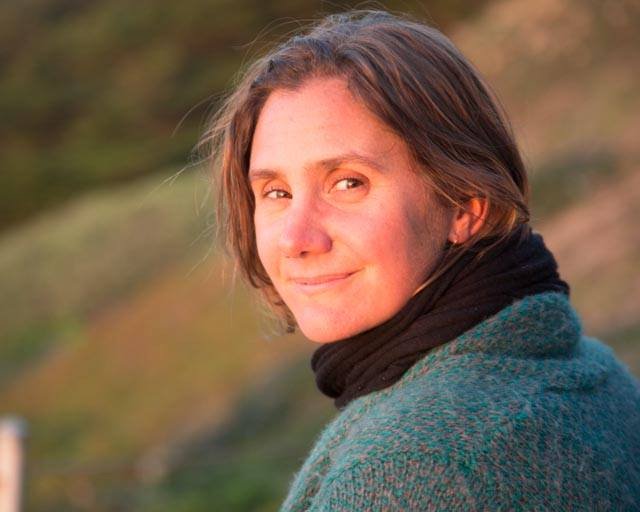
Darcy Ottey
Darcy Ottey (she/her) is a cultural practitioner, facilitator, anti-racist educator, and Co-Founder and Co-Director of Youth Passageways, an intergenerational and cross-cultural network supporting the regeneration of healthy passages into mature adulthood for today’s youth. A queer, white, able-bodied woman in her 40’s from a mixed middle/working class background, rites of passage have been part of Darcy’s life since her coming of age journey when she was 13. The descendant of Quaker settlers, British coalminers, and Ukrainian peasants, her early encounters with nature and ceremony instilled in her a deep sense of belonging and connection with the more-than-human world. Her formal and informal education brought understanding of the colonized and colonizing contexts of these experiences. Her work is all about synthesizing these experiences by: supporting white people and others with privilege in dismantling systems of oppression internally and externally; building resilient networks of relationships across difference; and building community capacity for meaningful acts of redistribution, reparations, and rematriation. Darcy is grateful for her teachers, mentors, family, and community. She loves dancing (especially under the full moon), learning to make Slavic folks dolls, and preserving food and plant medicines. She (sometimes) makes her home along the Methow River in Okanogan County, Washington, the territory of the Mətxʷú people and the many beings that survive and thrive throughout the watershed.

Calling In Our Collective Wisdom
Our small group of elders included past and present Journeys Board members, former trip participants, and supportive volunteers like myself. We assigned ourselves in groups of 2-3 to be present to witness and honor the journey of summer participants (we dubbed them “Questers”) before they depart and to recognize and celebrate them on their return.
Calling In Our Collective Wisdom
By Kurt Kutay
As an outdoor explorer and seeker of my own internal realms, I thrive in the wild and the supportive community of friends and family with whom I share my journey. The programs and people of Rite of Passage Journeys are one of my pathways to discover, learn and share wisdom for my personal and our collective conscious evolution. When I was called to be part of Journeys’ Elder Wisdom Council this summer, I loved the opportunity to serve the organization and support youth headed out on their summer adventures fostering self-discovery, community belonging and a connection with the natural world.
Our small group of elders included past and present Journeys Board members, former trip participants, and supportive volunteers like myself. We assigned ourselves in groups of 2-3 to be present to witness and honor the journey of summer participants (we dubbed them “Questers”) before they depart and to recognize and celebrate them on their return. In as much as our role is to support the Questers through our lived experience, what I discovered is that the wisdom of our Council isn’t sourced from our elder enlightenment, but more so by simply being present to hold space for our collective wisdom to unfold, as it befits and supports each of the individual Questers at the start and end of their Rite of Passage Journey.
Within hours of checking in at the Journeys Bothell basecamp and saying goodbye to their family who delivered them, each participant is directed up a path through the forest following the sound of an African welcome drumbeat to find a few grey-haired elders gathered in a “Listening Circle”, a small circle we hold sacred on the threshold of their big adventure ahead.
After friendly hellos and introductions, we ask about their family and friends they are leaving behind and gently prompt conversation about what drew them to the journey (most often it’s “my parents”). We query what they expect to happen, what concerns they may have about their adventure, and what they hope to discover. We get to know them as initiates, and, when the group returns, we are present to bear witness as the first human beings they sit with to share their stories, newfound gifts and passions they now envision for themselves and the world. One sage piece of advice we offer them is not to share anything about their experience they may not be ready to share or that they want to hold for themselves deeply and privately forever as their own treasure!
It’s truly an honor to be in their presence in this moment of their lives, to listen, to laugh and to acknowledge their strengths and accomplishments. Some are deeply personal physical or mental achievements, while for some it may be more about learning how to be present and supportive of others in their community. As Journeys elders we are already familiar with the rituals, ceremony, fun games and loving guidance that skilled and heart-centered Journeys guide teams facilitate on each trip. But nature presents itself in unexpected ways on every adventure, and each group brings its own social dynamics and shared life experiences into the mix. As a result, every journey and each experience of every Quester deserves to be heard and honored.
We get to listen to how participants are tested by physical and mental challenges in nature from leaving home and creature comforts behind (such as hot showers and home-cooked-meals), to learning outdoor skills and how they managed their Solo vigil. Some share how they learned to listen and communicate better in council circles around the fire each night, supporting each other and resolving conflict — all of which leads to a deepening relationship with nature and personal transformation in their own rite of passage.
By the way, we also invite each of the trip leaders into our circle, to give them any support they may need as they accept the responsibility as guardians and guides of young Questers, embarking together on their adventure into the wild. Every trip has an experienced lead and assistant guide, and a mentor guide, and each one of them appreciated the opportunity to be held in our sacred circle. We recognized the transition from their own busy world and acknowledged that they are not just trekking through mountains but to honor how they traverse into minds and hearts as counselors, mentors, guides and guardians. They all felt recognized and held by the organization.
Ancient traditions and modern practices of rites of passage are designed to strengthen individuals, families, and communities as a whole. Initiates learn what it means to be a responsible community member, while exploring unique personal gifts that can be used to live their best life and to serve others. Indeed, in the present context of challenging family dynamics and the multiple crises facing our world at home and abroad, the staff, guides and mentors of Journeys do this work to heal our souls, deepen our connections with others, and create community that protects and sustains life on our Mother Earth.
Summer departures for youth (and adults) are scheduled and booking up. If you are called to go out in the wild in 2022, or you know someone who may be inspired, I invite you to call Rite of Passage Journeys, and talk to one of the staff and amazing trip leaders. I have personally witnessed the transformation that Rites of Passage inspires in others. As much as I get out hiking, camping, SUP surfing, mountain biking and traveling the world, the opportunity to support others on their life changing adventures in the wild or traveling abroad is a community that brings me great joy and meaning in my life, sharing the wisdom we all bring to our world.
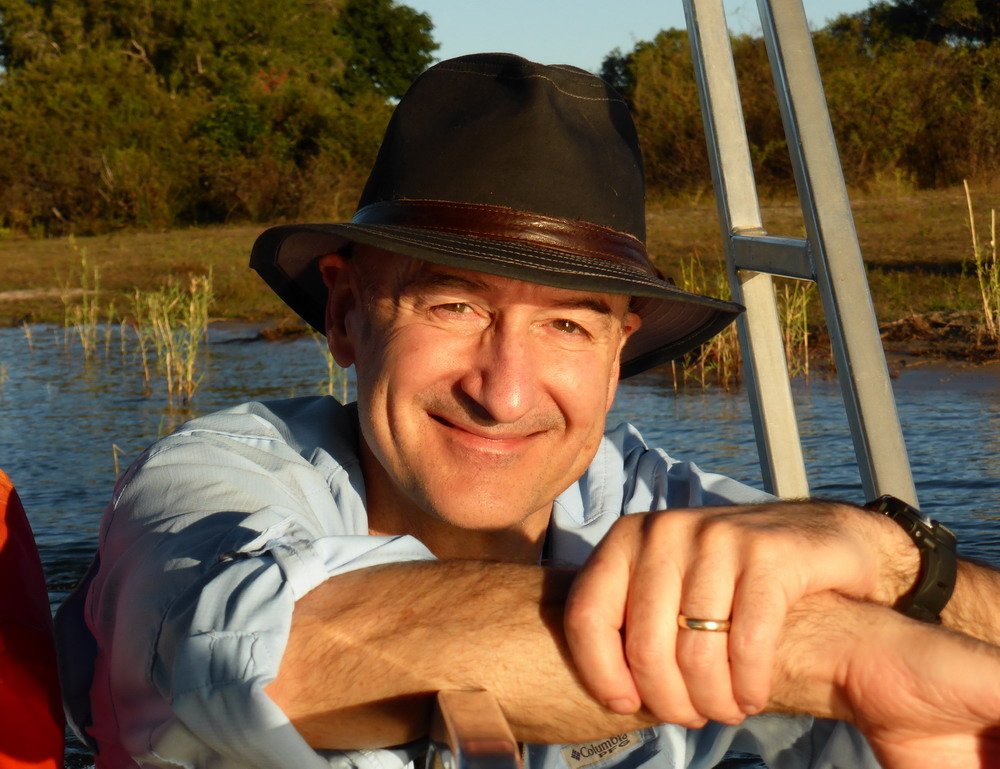
Kurt Kutay
Kurt Kutay (he/him) has led a life of adventure, exploration and self-discovery dedicated to conservation, activism and compassionate community. He is an ecotourism pioneer, having designed and led adventure trips throughout the world as the founder and former CEO of Wildland Adventures, a global adventure travel company. He currently serves as the Director of the non-profit Travelers Conservation Trust, and founding board member of the Transformational Travel Council dedicated to deepening travelers’ life-changing experiences and stewardship of nature and cultural heritage through travel.