
Meeting Our Herbal Allies
By Stef Frenzl
I’m drawn to wild, medicinal herbs. There’s something about them that captivates me more than the cultivated varieties. I believe it’s because I see parts of myself in these wild beings, as though they are a mirror for me to deepen my own understanding of myself. I’m drawn to them because they have what I long for…
I’m drawn to wild, medicinal herbs. There’s something about them that captivates me more than the cultivated varieties. I believe it’s because I see parts of myself in these wild beings, as though they are a mirror for me to deepen my own understanding of myself. I’m drawn to them because they have what I long for — a connection to wildness, nature and healing. I sense a deep, soulful remembering of my own healing nature and wildness when I’m around them.
They also connect me with the grief I carry, because I have become more domesticated than I would like to admit. Or maybe it’s because our dominant culture sees these wild plants as weeds, and I feel they’re not given the respect they’re worthy of as fellow beings, with their own will to express life in their particular form.
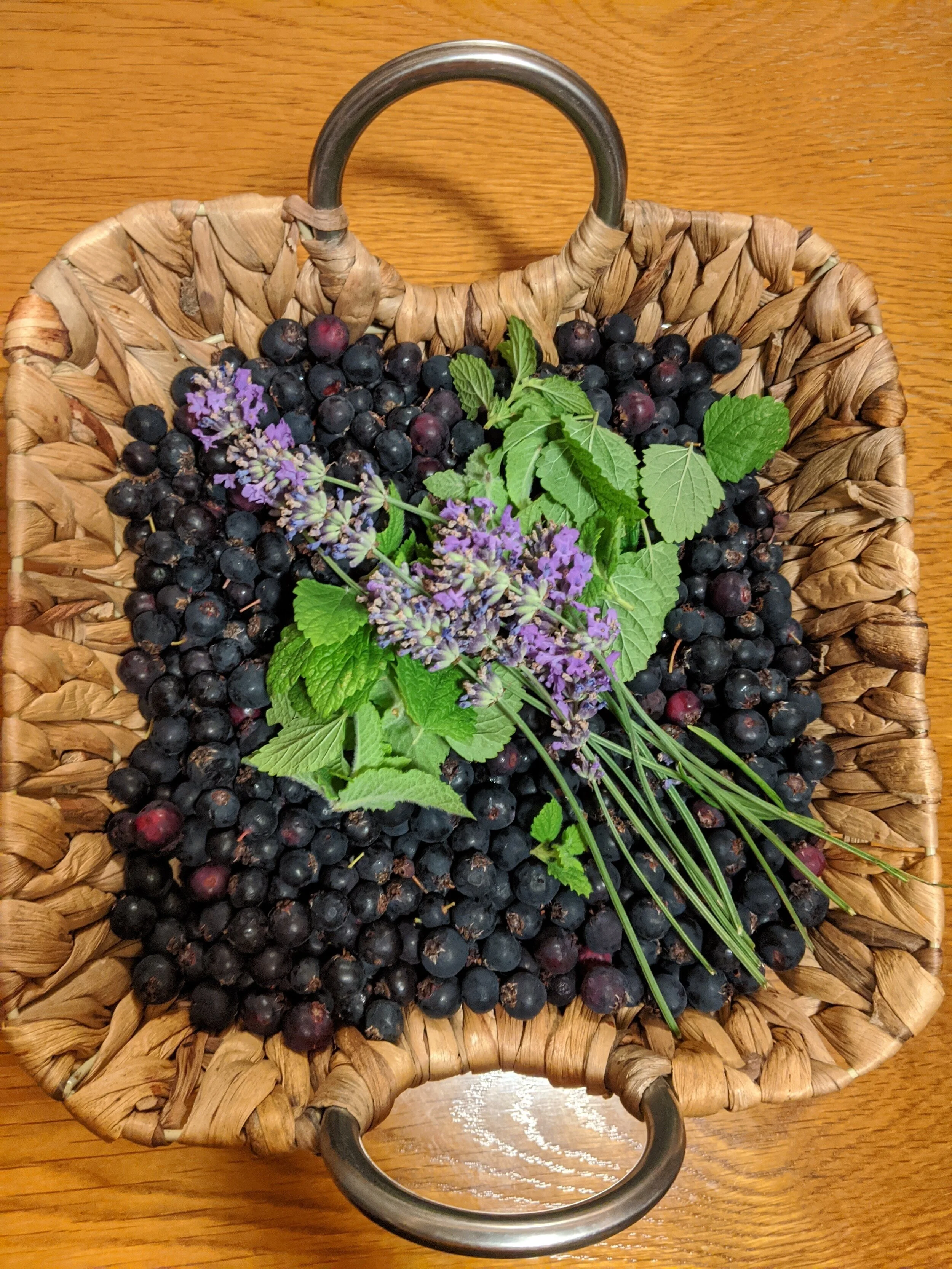
I’m also drawn to wild herbs because they make the best herbal medicines. Over the years, I’ve become an amateur herbalist, and it’s one of the greatest joys of my life. Many wild plants can be used to make tinctures, teas and poultices, infused oils, lotions, salves and more to help us heal all sorts of physical ailments. They can ease rashes and stomach aches, remove the pain from bee stings, help us heal broken bones faster, and so much more. Some wild plants can also support us emotionally — they can lift our troubled mind from a stressful day, or nurture a broken heart in times of grief. The blessings these herbs offer us is profound, and it touches me deeply knowing we can work with them as allies for our own health and wellbeing.
As with many worthy endeavors in life, it’s taken a long journey for me to gain the knowledge I’ve come to carry. And, I’ve forgotten way more than I will ever remember. It can be humbling in that way, but it can also be incredibly fun and easy to get started. Making herbal remedies is quite simple, actually. Most remedies are much easier to prepare than most dinner recipes. And, it’s amazing what a person can learn in just a few short hours with a good teacher.
One of the recommendations I offer to anyone inspired to learn the joys of this craft of wild herb medicine making is to build a personal connection with the herbs themselves. In my opinion, the effort to form a relationship with each plant you work with is probably the most important aspect of the craft. Many herbalists call the plants they work with herbal allies to honor this relationship.
The fascinating nature of working with herbs, in my experience, is that each species has its own personality of sorts. And each plant species can form a unique relationship with you. It’s a lot like your human friends: the quality of each relationship is different. Bob might be your friend who you love to go on grand and playful adventures with, and Monique may be the one you usually turn to for soulful conversations. Relationships with herbs are similar. Each herb helps you heal and access different aspects of yourself — fun, play, adventure, quiet conversations, and more.
Here’s an example. Hawthorn, a tree found in parks and along neighborhood sidewalks here in the Pacific Northwest, has two main characteristics for me. First, it’s a plant that is connected to my heart. The leaves, flowers and berries help me open my heart when I am feeling closed-hearted, and, just like a trusted friend, they literally soothe my heart when I’m grieving. Medicinally, Hawthorn berries are used for diseases of the heart and blood vessels such as congestive heart failure, chest pain and irregular heartbeat. It also regulates blood pressure and lowers high cholesterol. Hawthorn is a good ally to know!
And so over these past few months, as Covid-19 has disrupted our lives, and as so many people are losing their lives from this pandemic, Hawthorn has been a trusted friend to help me stay open-hearted, and to keep me from going numb and closed as I witness the destruction and chaos of these dark times.
And yet, at least for me, there’s also a playful trickster aspect to this plant. I sense a spry, wryly nature to it, and it ignites this same nature inside myself. Maybe it’s because I learned its connection to Irish folklore on a pilgrimage I took to Ireland a few years ago.
In Ireland, Hawthorn trees are known as fairy forts, or portals, where the Sidhe (pronounced “shee”), the Fairy people, enter this world from under the Earth. People in Ireland tend to stay away from places where the Sidhe may reside, as they are known to be tricksters, and there are many a tale of the fairies abducting people and playing unfriendly tricks on them, and other stories where the Fairies kill people outright. In our modern American culture, many may view this as “just folklore” and superstitious nonsense. In Ireland, however, many have a very different perspective, indeed. There is a sense of being deeply rooted to their ancient tales, and many still treat the Hawthorns with deep respect as a result. It’s said that if you cut a Hawthorn tree down, the fairies will get their revenge on you.
To indicate how real this is for many in Ireland, the upgrading of the National route from Limerick to Galway in County Clare was delayed, rerouted and eventually opened nearly 10 years after it was supposed to have started, apparently all because of a Hawthorn tree that was in the proposed pathway of the new motorway. The delay began over an objection raised by a local man, folklorist Eddie Lenihan, on the grounds that this Fairy Tree marked the spot where the Fairies from the province of Connacht meet the Fairies of Munster, in times of battle between the two forces. He said that damaging the tree would bring on the wrath of the Fairies not only to the construction workers, but also to motorists driving over the former location for many years to come. He said, “It is sacred ground, it doesn’t revert to being a normal place.” The tale was covered by National and International media, and a decision was made by Clare County Council to fence off the tree to protect it during the works. And this happened in 1999!
Depending on who you talk with in Ireland, there are differing stories about whether the motorway was deliberately re-routed to protect the tree; however, from an aerial view, the road does have a curious bend that seems to avoid the tree intentionally. Regardless of whether the motorway was intentionally re-routed, it’s much less likely that a Hawthorn tree, or almost any tree for that matter, would cause such a delay here in the United States. The Irish connection to and reverence for the land and myth is still very much alive.
Another example of this reverence for nature is at many of the thousands of sacred wells in Ireland. Near many of the sacred wells, you will find a Hawthorn tree that’s been planted near the well long ago, and prayer ties hang from its branches and flicker in the wind as a way of honoring the spirits of the land and sacred well water. These trees are seen as sacred, indeed.
For me, Hawthorn also connects me to the mysterious, sacred and reverent, but also playful and trickster-like aspect of my inner nature. When I am feeling sluggish and lazy, sometimes a dropper-full of hawthorn berry tincture does just the trick to help me access a better, more vibrant and alive mood. I also sense a deep connection to this plant in a way that I can’t consciously understand. I feel a deep union with Hawthorn that feels beyond the bounds of time, as if somehow my Irish ancestors are remembering their relationship with Hawthorn through me. I feel more whole when I connect with Hawthorn in this way. The experience is deeply connecting and personal.
Hawthorn is just one example of how herbal allies can support us. There are literally hundreds of others, too. These allies can offer everything from healing a cut to helping us find deep connection and wholeness. The good news is that wild herbs are all around us, many even right outside our front door, and I believe they are beckoning us to connect with them, to help us reconnect with the old healing ways.
As summer turns to fall, I invite you to deepen your connection with one of these herbal allies. Go outside, quiet your mind and open your heart. Wander off the trail until you feel allured by a particular plant, and sit down next to it without trying to identify it. Introduce yourself and see what happens. Maybe this one could be a new life-long ally.
1. www.webmd.com
2. www.irishtimes.com; May 29, 1999
Related Articles




Earth as Teacher
By Dave Moskowitz
When I was 15, I fell head-over-heels in love with the natural world. Learning about and being in nature became an obsession, one that led me to drop out of high school so that I could spend all of my time outdoors. Being able to escape to the oak woodland-covered hills of central California when I was a teenager helped me cope with this challenging time of life. While I was wandering through the woods, friends where also dropping out of school but they were getting addicted to drugs, and even committing suicide. I found a great deal of healing for myself through time spent alone in the natural world.
When I was 15, I fell head-over-heels in love with the natural world. Learning about and being in nature became an obsession, one that led me to drop out of high school so that I could spend all of my time outdoors. Being able to escape to the oak woodland-covered hills of central California when I was a teenager helped me cope with this challenging time of life. While I was wandering through the woods, friends were also dropping out of school but they were getting addicted to drugs, and even committing suicide. I found a great deal of healing for myself through time spent alone in the natural world.
It was from these experiences that I came to work with other people in the wilderness. I strongly believe that in our modern world there is something sick within all of us. It longs for a connection with nature. A modern rite of passage experience is powerful in part because it connects the participant with nature and provides an atmosphere conducive to recognizing relationship between their environment and themselves. However, in a world increasingly dominated by the fast paced and flashy, nature often appears boring. How do we -- educators, guides, and mentors, create the opportunities for young people to discover these connections?
One answer to this question can be found in a wide variety of books written on nature activities and environmental education. There are many activities designed to engage students and teach them about the importance of the natural world and their connection to it through fun games and initiatives (problem solving activities). Many of these activities are fun and useful, but to me they have often seemed contrived and lacking of a sense of authenticity. This may come from my initiation into nature. I didn't learn about the meaning of a food web from a game where everyone pretends to be a different plant or animal and holds onto a long piece of rope next to the thing that they eat or are eaten by. I went into the woods without food and foraged for my meals. This is not to say that games and initiatives are not a valuable tools for teaching. They can be engaging and fun, especially for younger audiences. But their game-like quality is also limiting. How seriously is someone going to take a game, anyway?
A deeper learning comes from direct experience of the natural world. You can be sure that I understood the relationship between my life and the lives of other parts of the environment after feeding myself from things I gathered in the wild. But I also learned a great deal more than that. I learned empathy, awareness, ingenuity, and self-reliance from that same experience. I learned to appreciate the gifts given to me by other living beings, including the gifts from the people who had provided for me for many years.
I am not saying that we need to take people into nature and make them eat only what they can find. I'm saying we can use activities in the outdoors from which students learn directly from their interactions in and with nature, not just from games. This might be taking their wristwatch and sending them to wander around aimlessly along a stream until we come and get them at some unspecified time later in the day.
In some ways this seems easy: put them in a natural setting and they will learn something. While you never know exactly what the learning outcomes for any experience are going to be, you can design experiences with particular objectives in mind. Self-awareness, self-reliance, awareness of the environment, team work, and compassion are all things which can be learned through experiences in the natural world. The more "real" the experience, the deeper the learning derived from it can be. A student who really gets lost and can't find her way back to camp for a time will feel in her gut her dependence on her family and society. This experience will probably have a much greater impact than if you just asked her to imagine this experience. Besides creating the appropriate activity, a leader should also be able to frame the experience beforehand and to process it afterwards. This helps prepare participants for the activity and for reflection and analyzing the experience afterwards.
Taking people into the wilderness and creating a safe container for their experiences is often all the leader may need to do. The power of the beauty and rawness of the natural world can be more influential on students than any number of planned activities. I experienced this during the backpacking portion of the Wilderness Quest several years ago. We had just finished a grueling day of climbing up to a camp above tree line. We were all together around the camp stoves as water heated. The sun was setting over the mountains to our west, lighting up the horizon and making the huge glaciers on Glacier Peak and the other mountains surrounding us glow with a pinkish hue. After a few minutes of this, one of the students (someone who usually was more interested in talking about video games or anarchy) out of the blue said, "I had no idea that there was anything like this in the world. This is the most beautiful thing I've ever seen in my life. " Other students followed with other comments about how this campsite was unbelievable and made them realize just how important wilderness is and how good they felt about being able to make it there. One student mentioned that if they didn't realize that this existed just 50 miles from where they had lived all their lives, there must be an infinite number of other things in the world which were even more beautiful and amazing to be discovered. At the end of the trip, several students brought up this camp and the sunset as one of the highlights of the trip. For the leaders, it had just been a practical spot to camp to keep on schedule for the trip. After doing all sorts of discussions, activities, and telling stories to try to get the students to realize these things, it was just camping in an amazing spot that really opened them up.
As a leader I now try to think of myself as a student, or a follower, of the natural world. Since my passion for the wilderness first blossomed as a teenager, I have studied the natural world and outdoors skills from a wide variety of perspectives and in several different contexts: from living in a bark hut to academic college classes. But of all the things I have read and human teachers I have worked with, none of them have taught me as much as my direct experience - living, working and playing in the wild.
A wilderness rite of passage doesn’t begin when a participant arrives at the trailhead or end the moment they return home.
The weeks and months surrounding a rite of passage can be just as juicy as time spent in the wilderness. The experience itself plants a seed: a taste of independence, a new sense of wonder at nature, a question about identity, or a glimpse of who we might become. But what happens next is what allows that seed to burst into glorious bloom.
That’s why, at Rite of Passage Journeys, we see autumn as an essential season in the spiraling path of a rite of passage. When the energy and vitality of summer abate, we enter a season that invites us to cool off, slow down, and marvel at the changing colors of the landscape – both out in the world and deep inside.