An Amazing Summer
Elder Fred, 1935-2010
Originally published on September 6, 2010
It has been an amazing summer! In my wheelchair, I have been able to go outside almost every day. I have watched our landscape attain its intended beauty through the hard work of our adult children and grandchildren. Trips to the community gardens have provided sheer delight. Sitting under the new gazebo I have watched the garden unfold, realizing an earlier vision. Although I can no longer dig, plant, weed or harvest, the ongoing dialogue with my fellow Biogaians (Songaia gardeners) keeps me in the loop of the landscape and garden plans and activities.
It has been an amazing summer! Visits from colleagues, family and friends continue to provide stimulation and enrichment to my daily life. Total dependency on others for basic needs has increased. Most recently, community or family members “serve” me my meals as I can no longer use my arms and hands. Body work, hugs and other forms of touch are ever more significant, forming deeper relationships with those I encounter.
It has been an amazing summer! I look forward to each new day with its greater challenges of total dependency along with the new insights that come. I am hungry to learn something new. Due to my immobility, I find myself watching many nature documentaries with their captivating insight into the intricacies of the web of life. I realize that I am an integral part of this very web. Truly, we live in a sacred universe.
Related Articles

A tendency towards polarization – division between sharply contrasting ideological perspectives – is very alive in today’s world. When we reduce each other to ideological labels – leftist, right-wing, communist, racist - we fail to see each other as humans. Whatever “side” we are on, a polarized approach to healing our world still perpetuates a culture of separation, supremacy and domination. Judging, labeling, and shaming people with different perspectives feeds polarization, but there is another way. Recent studies in deep canvassing show that when we deeply listen to each other, even to people with perspectives that we believe may be bigoted or misguided, both of our perspectives actually evolve. Bridging across polarization is challenging, but possible.

Singing with others. Community singing has become a medicine to shift my energy. It isn’t a panacea for grief. I still sometimes end up on the floor in my sorrow. But in that heaviness of heart, I am not alone. I am surrounded by a village of song that supports the metabolization of the emotions that are waiting to move through me.
To dreamwalk, we must first realize that the Earth has a consciousness and soul with which we can build a relationship. Philosophers often call this world soul the “Anima Mundi.” Although it may not speak to us in full, grammatically correct sentences, the Anima Mundi does communicate with us. It speaks the language of the dream world, sending messages through our experiences in waking life, which can then be explored as symbols, metaphors, images, emotions or tones. These types of coded messages speak to a deep space of inner knowing – one that is also engaged when we are dreaming, imagining or creating. We can therefore explore them in many of the same ways that we might explore the symbols from our night dreams.

And, often overlooked, there is another gateway to mystery and higher wisdom, accessible to all of us, 4-7 times every night... our dreams.
Dreams are inherently transformative and initiatory in that they always come, as my late mentor Jeremy Taylor would say, just at the edge of our conscious awareness. "No dreams come to tell you what you already know. They always break new ground and open access to new layers of consciousness," he said. For this reason alone, though there are many others, directing energy towards improving access to the dream state and cultivating skillful means for understanding them (what some call "dream interpretation methods") is an endeavor very much worthy of one's time and efforts.

In this blog, Randy Morris offers his thoughts on the question of “Who am I?”, archetypal patterns of human development, and how they relate to our thinking and practices at Rite of Passage Journeys. He writes, “I offer the following reflections as a step in the direction of clarifying the basic principles and assumptions that guide our work. I often refer to these assumptions as the Center Pole of Journeys. The image of the Center Pole marks where we stand most authentically as a non-profit organization and as an earth-centric community. A well built Center Pole tells us what we are, and what we are not. To articulate a Center Pole is to encourage and foster a community of learning.”

Today, Journeys remembers our founder Stan Crow, who passed away on November 15th, 2009. Stan was an outstanding mentor for many in their youth and young adulthood, devoting much of his life to providing them meaningful coming of age experiences. One of those young people is our former Executive Director, Darcy Ottey, who in her new book shares the impact Stan had in her life and the lessons on mentorship his legacy left behind.

Our small group of elders included past and present Journeys Board members, former trip participants, and supportive volunteers like myself. We assigned ourselves in groups of 2-3 to be present to witness and honor the journey of summer participants (we dubbed them “Questers”) before they depart and to recognize and celebrate them on their return.

Even as we celebrate the beauty and balm of connections within the circle, the emergence of authentic community by its nature invites the questions, “Who is left out and why? How do we re-dedicate our work to opening even wider circles?”

In this blog submission, Zach Gardner offers some insight into the ways in which the aesthetic appreciation of natural environments can enhance our relationship with nature. He provides a perspective that unites ethical consideration with aesthetic engagement, resulting in an approach that revitalizes human interaction with the natural world.
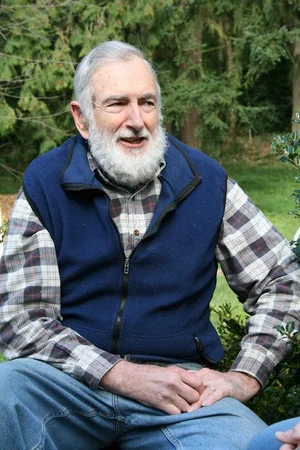 Fred Lanphear
1935-2010
Contributed by Nancy Lanphear
In 1973, the Order: Ecumenical (ICA), Journeys founding organization, established the Student House on the 4th floor of the facility in Uptown Chicago, a very urban situation. About fifty 12-15 year olds, some who participated in the “6th Grade Trip” (the forerunner to Rite of Passage Journeys coming of age programs) and others, came together in the Student House each year following the summer trip for a 2-4 year stay. The intention of the program was educational, cultural and developmental for the youth, and in support of the parents to provide more time and focus on the mission of the organization around the world. Fred and I were directors of the Student House program from 1980-1983.
In 1987, Stan and Carol Crow brought the program to the Northwest, settling in Bothell, Washington where, with others, they founded Songaia. There Stan established a basecamp from which to operate Rite of Passage Journeys and began to build a Pacific Northwest-based wilderness rite of passage curriculum to serve youth aged 11-18. Fred and I arrived in 1989, making an addition to the staff, which included our son Bob. We worked with the kids, and provided financial support with part- and full-time jobs outside of the community. As Fred was working part-time, he was able to contribute many discoveries and skills of landscape and gardening to the program.
Fred was a huge presence in mentoring. His active participation took place in workday events, through financial support, and, with Stan Crow and Edith Kusnic, creating and facilitating Journeys’ first Elder Retreat in 2008. Fred encouraged and helped our 8 grandchildren to participate in Journeys Coming of Age trips over the years, and he served as a surrogate parent and grandparent for other children during Journeys Severance and Return ceremonies.
Fred died in 2010, after surviving ALS for nearly 3 years, during which his limitation of movement allowed a practice of sharing, listening, telling stories, and asking life question of folks within and beyond the Journeys community. His heart and voice were always seeking to support and enable others to see their lives as significant and a critical part of Planet earth, our home. Perhaps Fred’s blog entry below would help in understanding his life and Intentions.
- Nancy Lanphear, beloved Elder of Rite of Passage Journeys and Songaia
A wilderness rite of passage doesn’t begin when a participant arrives at the trailhead or end the moment they return home.
The weeks and months surrounding a rite of passage can be just as juicy as time spent in the wilderness. The experience itself plants a seed: a taste of independence, a new sense of wonder at nature, a question about identity, or a glimpse of who we might become. But what happens next is what allows that seed to burst into glorious bloom.
That’s why, at Rite of Passage Journeys, we see autumn as an essential season in the spiraling path of a rite of passage. When the energy and vitality of summer abate, we enter a season that invites us to cool off, slow down, and marvel at the changing colors of the landscape – both out in the world and deep inside.