The Spiraling Path of Rites of Passage
A wilderness rite of passage doesn’t begin when a participant arrives at the trailhead or end the moment they return home.
The weeks and months surrounding a rite of passage can be just as juicy as time spent in the wilderness. The experience itself plants a seed: a taste of independence, a new sense of wonder at nature, a question about identity, or a glimpse of who we might become. But what happens next is what allows that seed to burst into glorious bloom.
That’s why, at Rite of Passage Journeys, we see autumn as an essential season in the spiraling path of a rite of passage. When the energy and vitality of summer abate, we enter a season that invites us to cool off, slow down, and marvel at the changing colors of the landscape – both out in the world and deep inside.
Written by Laura Brown, Executive Director
Autumn as a Season of Integration and Preparation
A wilderness rite of passage doesn’t begin when a participant arrives at the trailhead or end the moment they return home.
The weeks and months surrounding a rite of passage can be just as juicy as time spent in the wilderness. The experience itself plants a seed: a taste of independence, a new sense of wonder at nature, a question about identity, or a glimpse of who we might become. But what happens next is what allows that seed to burst into glorious bloom.
That’s why, at Rite of Passage Journeys, we see autumn as an essential season in the spiraling path of a rite of passage. When the energy and vitality of summer abate, we enter a season that invites us to cool off, slow down, and marvel at the changing colors of the landscape – both out in the world and deep inside.
Making Meaning After the Wilderness
Coming home from a summer wilderness rite of passage can be surprisingly complex.
Your young person might return with stories, insights, challenges, or a new way of seeing themselves. At the same time, they are stepping back into school, family, friendships, screens, and all the familiar habits and structures of everyday life. That transition back to “reality” is a threshold of its own.
There can be a temptation to immediately make meaning of the experience: What did you learn? How did you change? What are you going to do differently now?
But integration often asks for something quieter. It asks us to make space for the experience to settle. Spend time outside together. Take a walk without an agenda. Sit around a fire. Make art. Journal. Create a little more breathing room in the rhythm of life. These simple practices can offer young people the conditions to notice what has stayed with them and what is beginning to emerge.
The goal of integration isn’t to recreate the intensity of the summer experience. It’s to give young people the ongoing support to metabolize it, to ask themselves: What am I carrying forward and how might it shape the way I move through the world?
Sometimes the most important part of integration is not finding an answer, but learning to stay with the question.
The Art of Accompanying Change
For parents and caregivers, this period can bring its own set of questions: How do I support what has changed without projecting my own expectations onto it? When should I step in, and when should I step back? How do I honor an experience that I didn’t personally share?
A rite of passage asks young people to grow into greater intention and authorship of their lives. For the caring adults around them, that often requires practicing a different kind of presence.
Rather than forcing the process or directing each step, we learn to accompany. We listen. We stay curious. We tolerate uncertainty. We allow young people to wrestle with questions and tensions that may not have easy answers. Accompaniment doesn’t mean becoming passive or uninvolved. It means learning to discern when our presence is needed and when our trust is more useful than our intervention.
Sometimes accompanying means asking a question instead of offering an answer. Sometimes it means allowing a young person to struggle with something we know they could do more easily with our help. Sometimes it means simply saying, I’m here if you want me.
In this sense, the work of the rite of passage continues to spiral outward at home by creating the space and conditions for a wider perspective to emerge.
Preparing for the Wilderness
The spiral also moves in the other direction.
For young people preparing for a summer wilderness rite of passage, the months before can be a time to spiral inward and build internal capacity, without trying to predict or control the external experience. There is practical preparation: getting familiar with gear, spending time outside, developing physical stamina, learning to navigate discomfort, and practicing being part of a group.
But there is also a deeper kind of preparation. A rite of passage depends in part on the embracing of challenge and mystery. We cannot – and should not – eliminate all uncertainty for our young people. Instead, we can help them develop the tools to meet what arrives in the unknown.
That might mean practicing small acts of independence. Letting them make decisions and experience the consequences. Encouraging them to try something difficult before stepping in. Talking honestly about fears without trying to make those fears disappear.
And for parents and caregivers, preparation may involve a different kind of personal practice: learning to loosen our grip. A rite of passage asks young people to step toward the unknown. It asks their caregivers to do exactly the same, and to let them go.
The question isn’t: How can I make sure my child is ready for everything that might happen on a wilderness rite of passage? It’s: How can I help my child trust their own capacity to meet whatever happens with courage and curiosity?
A Larger Spiral of Transformation
We often think of rites of passage as a discrete, intensive experience: a group of young people goes into the wilderness, spends meaningful time away from home, and returns different.
But transformation doesn’t happen in a straight line, with a clear beginning, middle, and end. It unfolds in a spiral. Before the journey, there is preparation and anticipation. During the journey, there is challenge, connection, reflection, and discovery. After the journey, there is integration: a process of figuring out how to let an experience in the wilderness take root in the life waiting at home.
And then, eventually, we meet our next threshold and the spiral continues.
The work between journeys matters because this is where experience becomes practice. It’s where a young person begins to carry what they encountered in the wilderness into the ordinary moments of life: how they make decisions, navigate relationships, respond to difficulty, understand themselves, and imagine what comes next.
And it’s where parents and caregivers have an opportunity to grow, too.
Autumn sits beautifully in the in-between space. It’s a season of harvesting what has grown, releasing what no longer serves us, and preparing the soil for what comes next.
Whether your young person is bringing a summer experience home or beginning to imagine their first wilderness rite of passage, this season offers an invitation to stay in the spiral – to remember that the journey doesn’t end when we leave the wilderness; it continues wherever we are.
For families who want to intentionally practice this work together, Rite of Passage Journeys offers two opportunities this autumn: Autumn Alchemy, a series of hikes for young people and families to gather outside, move through the landscape, and continue the work of connection and reflection; and The Art of Accompaniment, Junemee Kim’s online workshops for parents and caregivers exploring how to support young people through challenge, growth, and increasing autonomy.

Moving Beyond Polarization
A tendency towards polarization – division between sharply contrasting ideological perspectives – is very alive in today’s world. When we reduce each other to ideological labels – leftist, right-wing, communist, racist - we fail to see each other as humans. Whatever “side” we are on, a polarized approach to healing our world still perpetuates a culture of separation, supremacy and domination. Judging, labeling, and shaming people with different perspectives feeds polarization, but there is another way. Recent studies in deep canvassing show that when we deeply listen to each other, even to people with perspectives that we believe may be bigoted or misguided, both of our perspectives actually evolve. Bridging across polarization is challenging, but possible.
Moving Beyond Polarization
A tendency towards polarization – division between sharply contrasting ideological perspectives – is very alive in today’s world.
When we reduce each other to ideological labels – leftist, right-wing, communist, racist - we fail to see each other as humans. Whatever “side” we are on, a polarized approach to healing our world still perpetuates a culture of separation, supremacy and domination.
Judging, labeling, and shaming people with different perspectives feeds polarization, but there is another way. Recent studies in deep canvassing show that when we deeply listen to each other, even to people with perspectives that we believe may be bigoted or misguided, both of our perspectives actually evolve. Bridging across polarization is challenging, but possible.
To truly embody collective liberation, we need to find a way beyond polarization, rooted in an interdependent worldview that helps us understand and heal harm at its roots.
What makes it hard to move beyond polarization?
Before sharing some ideas about how we move beyond polarization, I want to take a moment to acknowledge and validate all the very real barriers that can stand in the way of us moving beyond polarization.
Our identity or sense of safety may be threatened by people with opposing viewpoints.
Can you think of a viewpoint that makes your heart race or your body tense up?
Is there some way that this viewpoint threatens your identity or safety?
What does it feel like to honor your need for safety and imagine putting up boundaries between you and people who hold this viewpoint?
Can you access any curiosity for the person who holds that viewpoint? How might they have come to take on this perspective?
We live in a culture of perfectionism and punishment.
Have you ever felt pressure to be “perfect,” or fear of making a mistake?
In the legal and judicial system you live under, what might happen to you if you were to make a serious mistake that hurt someone else?
Does this impact how you relate to making mistakes, admitting you are wrong, or changing your perspective?
We fear losing belonging.
Do you conform to external perspectives on social issues in order to belong?
Do you with-hold your true beliefs, deeper questions, or desire to complexify issues?
What would happen if your friends or community members heard that you were building a relationship with someone who held very different beliefs than the rest of you?
We aren’t practiced in holding multiple truths.
Do you abandon your own perspective when you empathize with someone else’s?
Do you avoid understanding someone else’s perspective because you think this would imply that you agree with or condone this perspective?
Our perspectives deeply matter to us.
Do your perspectives relate to your sense of identity and meaning?
What do you feel when you imagine throwing all of your perspectives away?
Are you able to “try on” other perspectives like hats, and figure out which ones suit you?
Do you judge some perspectives as stupid, wrong, dangerous, and violent, or do you try to understand the needs that are trying to be met by them, even if you disagree?
So how do we do it? How do we move beyond polarization?
Shift blame from individuals to culture and systems.
What cultures and systems perpetuate harm and violence?
How have unresolved historical traumas and injustices led to modern social issues?
When you consider addressing these issues at their root, what do you want to have happen to individuals who are enacting violence?
Connect to the universal needs we all share.
Think of any action that you think is “wrong.” How might this action be attempting to meet a universal human need for belonging, meaning, autonomy, connection, respect, love, dignity, safety and expression?
What other ways might someone meet this need that don't feel “wrong” to you?
What do you think an individual who would do that “wrong” thing would need in order to instead meet that need in a “right” way?
Ask curious questions and listen to understand, not persuade.
What does it feel like in your body to listen to someone with the desire to understand? To persuade them?
What does it feel like in your body to be listened to by someone with the desire to understand you? To persuade you?
The next time you notice yourself judging someone, can you access your curiosity?
Build relationships across differences.
Can you think of a relationship in your life that has led to you changing a perspective?
What were some of the qualities of that relationship?
Do you have any relationships with people that hold very different perspectives than you? Are there still positive things you can say about that person/relationship?
Honor our boundaries and follow the path of healing.
Do you ever try to force or rush “healing” in yourself or others? Does that feel healing?
Have you ever hurt or punished someone who harmed you? Did that feel healing?
What would your ideal healing process after harm look like, for you and for whoever harmed you?
Hold a grounded understanding of harm.
Do you fear that empathizing with the root of harm excuses perpetrators of harm?
Do you struggle to define what harm is and know how to prevent it from happening?
Do you feel your own autonomy (self-governance within your domain)? Are you able to speak up for your needs?
So what? Why does moving beyond polarization matter?
It matters because it is healing.
We are all interconnected expressions of life. When we cut off the humanity in another, we cut off the humanity in ourselves.
Moving beyond polarization is a crucial practice for embodying the world we long to live in, where every person is valued in their messiness and their inherent belonging.
How might moving beyond polarization offer you healing in your relationships and life?
It matters because it is revolutionary.
"People who are divided are easier to control." – David Draiman
It is easy to let our festering wounds divide us. In this critical time, we cannot afford to dig our heels into our pain and allow it to drive us further apart. And we also cannot afford to turn our backs to this pain - we must hold it together.
We need to ground ourselves in a shared understanding that the oppression that has happened and is happening is not okay. And in our commitment to anti-oppression and liberation, we cannot simply oppress and “other” those who oppress and “other” us; that just continues this cycle of division and harm.
Instead, we can work together to transform the conditions that make harm possible, knowing that othering/polarization is one of the conditions that makes harm possible. In order to transform our world, we need to remember how to hold curiosity, complexity and nuance together. Doing so is revolutionary.
Where in your life can you practice holding complexity and seeking to understand personal and cultural traumas to create a world centered in healing rather than division?
Moving beyond polarization can be an unfamiliar and uncomfortable process. However, doing so is an essential part of moving from a culture of separation, supremacy, and domination to one of respect, compassion, and interdependence.
______________________________________________
This is an abridged version of an article written by Lux, a trauma-informed and co-liberation-driven Conflict Mediator, Consent Educator, and Relational Coach.
Learn more about their work at healingrising.com and read the full article on Medium.
To deepen this exploration, join Lux at their upcoming offering through Journeys Rites of Passage:
An embodied day-long workshop on moving beyond polarization.
Saturday May 13, 10 am - 4 pm
Lux Gypsum
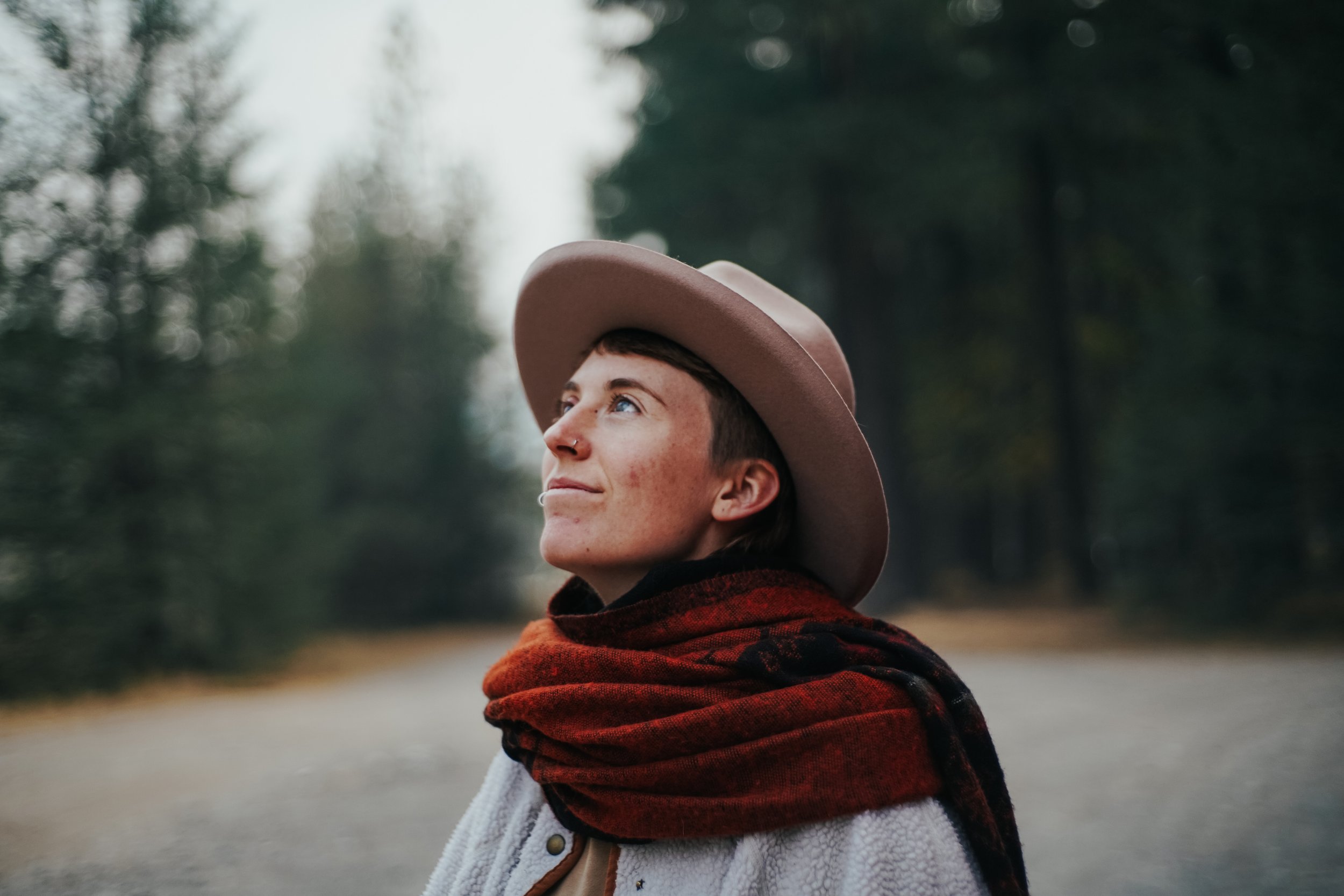
Lux Gypsum (they/them) is a queer, non-binary Facilitator, Conflict Mediator, and Relational Coach. Lux's work is guided by a calling to support us in transforming our culture of domination into a culture of co-liberation through un-winding and re-patterning how we relate to ourselves and each other. Lux is deeply grateful for the many wisdom-keepers who have generously shared their teachings, inviting them to stay in contact with the complexity of our inner and outer world in these trying times.

Song for Metabolizing Grief
Singing with others. Community singing has become a medicine to shift my energy. It isn’t a panacea for grief. I still sometimes end up on the floor in my sorrow. But in that heaviness of heart, I am not alone. I am surrounded by a village of song that supports the metabolization of the emotions that are waiting to move through me.
Song for Metabolizing Grief
Written by: Alexandra “ahlay” Blakely
Even as a grief tender, I sometimes catch myself running away from my own grief. The kind of grief where dreams and sleep feel safer than the agony -- until, that is, I awake in the darkness, to find grief laying right there waiting for me to rock her like a baby. The kind of grief where I seek to fill my days with busyness, community gatherings, exercise… anything to keep the grief at bay. But even then, I can feel grief lurking in the shadows, right behind the center of my throat. The kind of grief where, if I just stopped for one second, she would come rushing in, debilitating me for who knows how long. The kind of grief where I am not sure if I will purge or wail. The kind of grief where bed beckons like a tempting escape. Food, Netflix, and blackout curtains at 1pm. The kind of grief where I wish I could cancel everything and just disappear.
As someone who dedicates a large portion of her life to grief, to the sorrows of the world and the grief that others carry (both human and more than human), I need to strategically build joy and pleasure into my life. When I first began grief work I found succor in the famous quote by the poet William Blake, "The deeper the sorrow, the greater the joy." I understood this to mean that the deeper into my grief I allowed myself to delve, that the pendulum would naturally oscilate back and forth between these two binaries. And after years of waiting, and that not happening, I realized that I might have misunderstood.
What I have come to learn is that grief is a skill we build. It is a skill that is difficult to build, in part, because we live in a grief-phobic culture. We must practice it to become agile in it. And my, oh my, have I become agile in it! My grief muscle had become strong but my joy and pleasure muscles on the other hand had become weak and malnourished. I had gotten lost in the strength of my own grief. And although I do not regret that process at all, I did find myself longing for an equilibrium. I longed for something other than grief, something that would move me toward my fullest expression of being alive.
If I wanted to come back to a more central place from within the circle of my wholeness, I needed to cultivate practices of joy and pleasure. I started to pay attention to what practices had the capacity to shift my energy when I did them. For example, things as simple as focusing on my belly button when I inhaled and exhaled, walking in the forest, dancing, cold plunging, discovering more about my own desire and… drum roll… singing.
Not the singing you do alone in the shower or when no one else is home. Singing with others. Community singing has become a medicine to shift my energy. It isn’t a panacea for grief. I still sometimes end up on the floor in my sorrow. But in that heaviness of heart, I am not alone. I am surrounded by a village of song that supports the metabolization of the emotions that are waiting to move through me. Sometimes, through the singing, I am able to access ecstasy, sometimes I find an ineffable sense of inner calm through the collective co-regulation of nervous systems, entrainment and attunement. Sometimes it takes a few songs before “I feel better.” On the odd occasion, I don't feel better at all, yet somehow I always feel less alone.
Author and educator, Martin Prechtel says that in the Tz'utujil community from present day Guatemala use the same word for crying as they do for singing. And my mentor and colleague, Aaron Johnson, says that singing and grief are not separate. Singing, says Johnson, is a form of touch.
I am convinced that no one thing works for everyone. I am also convinced that we are living in a time when singing together is being remembered by the mycelial brain that is our collective knowing. It is this kind of communal singing that, despite colonization and genocide, many Indigenous cultures still practice today. The communal singing that my people forgot over 500 years ago and perhaps even much longer ago than that. For centuries, my ancestors also utilized communal singing in the oral tradition as a technology to pass stories and memories through time like time capsules to the future ones. Communal singing marked our initiations, rituals, ceremonies & celebrations. Communal singing was practiced by those that knew that song is medicinal. And through generations of assimilation into US culture, communal singing was sadly forgotten. Communal singing fell off the radar more and more as we were able to listen to music through machines. And gratitude to those who never forgot the magic of singing together, we are riding the ripples of their sacred work so that we can remember we’re not crazy for feeling the depth of our sorrow during times of collapse, that we were not alone, and that we do not need to do any of this alone, ever. Singing or grieving.
In my own experience, grief, more than anything, wants me to acknowledge her presence, honor her existence and alchemize her into something else. The way I have learned to do that best is through breath, the movement of my body, fresh air, cold water, and above all else: singing with others. Paradoxically, processing my grief through song has also become a way that I have learned to experience some of the greatest joys and pleasures in my life.
——————————————————————
Alexandra “Ahlay” Blakely lives on Coast Salish Land. She is a song carrier remembering that which was meant to be forgotten in her lineages (Ashkenazi, Scandinavian, Finnish, English, Scottish, Irish): song technology as connective tissues of the communal body. She blends song, body percussion, dance, stillness, breath & silence with the deepest intention to support others in remembering their inherent birthright to singing and rhythm. To learn more about her song circles and grief retreats visit her website and her current project WAILS: Songs for Grief, an album entirely dedicated to grief ro be recorded in summer 2023 with over 150 voices in the State of Washington. The album is inspired by the five gates of grief from Francis Weller’s book, The Wild Edge Of Sorrow.

Alexandra "Ahlay" Blakely
Alexandra "Ahlay" Blakely (she/her) is a song carrier, grief tender and ceramicist remembering that which was meant to be forgotten in her lineages. Her ancient ancestors of Old Europe (Ashkenazi, Scandinavian, Finnish, English, Scottish, Irish) sang, grieved and played together while building, creating, birthing, working & being in reciprocity with the Land. She understands these technologies to be fundamental in the expansion of one's internal capacity to participate in the collective shift towards life-affirming conditions. An underlying prayer in her offerings is that they may contribute to the shared effort to transform white culture into being more connected with our bodies, emotions, Land & the animate world around us.
To learn more about her work visit Healing at the Roots.
To support the upcoming album WAILS: Songs for Grief (an album entirely dedicated to collective grief) visit the gofundme.
Dreamwalking to Wake up to Our Belonging
To dreamwalk, we must first realize that the Earth has a consciousness and soul with which we can build a relationship. Philosophers often call this world soul the “Anima Mundi.” Although it may not speak to us in full, grammatically correct sentences, the Anima Mundi does communicate with us. It speaks the language of the dream world, sending messages through our experiences in waking life, which can then be explored as symbols, metaphors, images, emotions or tones. These types of coded messages speak to a deep space of inner knowing – one that is also engaged when we are dreaming, imagining or creating. We can therefore explore them in many of the same ways that we might explore the symbols from our night dreams.
Dreamwalking to Wake up to Our Belonging
By Katy Pavlis
It is important to remember that we are a part of the web of life, and that we belong here as a part of the living and breathing Earth. The false story of humanity as separate breeds imbalance and disruption. An inner awareness of our belonging to the web of life is needed in order for us to make sustainable and lasting changes to the way we live as a species. One of the ways to deepen our connection to the web of life is through dreamwalking with the Earth.
To dreamwalk, we must first realize that the Earth has a consciousness and soul with which we can build a relationship. Philosophers often call this world soul the “Anima Mundi.” Although it may not speak to us in full, grammatically correct sentences, the Anima Mundi does communicate with us. It speaks the language of the dream world, sending messages through our experiences in waking life, which can then be explored as symbols, metaphors, images, emotions or tones. These types of coded messages speak to a deep space of inner knowing – one that is also engaged when we are dreaming, imagining or creating. We can therefore explore them in many of the same ways that we might explore the symbols from our night dreams.
To begin building our relationship with the Anima Mundi we must focus our attention and curiosity on connecting with the Earth. Turning towards the Earth is the equivalent of saying, “Hello!” Such acknowledgement creates the beginnings of deeper connection and reciprocity. Energy follows intention. The more we turn our attention towards someone or something, the more the relationship grows.
When we go on a dreamwalk, our intention is to deepen our connection to the web of life. To do this we first ask the Anima Mundi, “How can I know you better? How can I feel and remember that I am a part of you?” You might be wondering exactly how to ask the Earth a question. For me, I take a moment to hold my question in my heart and mind. The question is delivered once my intention feels deeply rooted in my thoughts and feelings. It is at this point that I set out on my walk. Remaining in silence for the duration of the walk is important so that we are not distracted, freeing us to perceive fully through the senses.
To hear the answer, we must listen with our dreamer’s mind that speaks the language of symbol and soul. Intending to listen to the voice of the Earth as an oracle we must notice everything! What signs, symbols, plants or creatures are capturing our imagination? Bring your full curiosity to this process and trust everything that comes. Let the images of the natural world capture your imagination and awaken your unconscious mind. Everything we experience is part of the answer to our question – a message speaking to us directly from the soul of the Earth.
Let your dreamwalk be free from judgment and the need to reach a definite conclusion. There is always time in the future to explore the many layers of meaning presented to you through various dreamworking methods, researching symbols or seeing what wakes up in your inner knowing. For now, just perceive. Let yourself be surprised by how much the Earth speaks to you and how connected you actually are to the web of life.
Dreamwalking can be especially powerful when practiced with regularity. I go on a dreamwalk once a week. Each time I hold the above intentions, while asking the Anima Mundi, “If there was more that I could know about you today, what would it be?” With this question, I am creating an opening for the relationship to deepen, and preparing myself for the possibility of learning something new about the soul of the Earth.
On my weekly walks, I make a point to visit certain trees and plants. During each visit, I notice how they have changed since the week before – a new bloom or berry, a fresh leaf unfurling that I hadn't previously noticed. The plants are continuously changing and creating. I pay attention to who may have made a home among the leaves and branches – how these animals and insects respond to the weather, the season and time of day. As I observe these natural cycles and shifts in the world around me, I begin to realize my own cyclical nature. Recognizing that I am also changing and creating in response to these cycles, I experience my sameness and remember that I belong.
As my teacher Deborah Frances Dancing Crow always reminds me, it is important that we remember to "dream the good dream" for the world and its future. It can be easy to see how many things aren't working and lose ourselves in despair. Dreamwalking can be an antidote to this type of hopelessness and isolation. As we wake up to our place in the order of things, we come home to ourselves and our sense of belonging.
With this awareness of our interconnection, we dream the good dream with all of life. Together, with the soul of the Earth, we co-create a currently unimagined future – one of thriving and sustainable interdependence – allowing all of life to flourish in balance. May it be so.
We invite you to join Katy Pavlis and Lauren Morgan in our upcoming community program, Dreamweaving March 19-20, as well as our monthly Dream Council facilitated by Tamara Walker.

Katy Pavlis
Katy (she/her) is a lover of ritual, dreams and the earth. She began her study of mysticism as a young child through books and meditation. Throughout her life she has had the privilege of learning at the feet of teachers, elders, and healers from different traditions and lineages, and has earned a Bachelor’s Degree in Spiritual Studies and Liberal Arts from Antioch University. She has a long-standing private practice in which she offers healing ceremonies, as well as classes focused on the arts of ritual, mysticism and dreaming.

May We Be Dreamt
And, often overlooked, there is another gateway to mystery and higher wisdom, accessible to all of us, 4-7 times every night... our dreams.
Dreams are inherently transformative and initiatory in that they always come, as my late mentor Jeremy Taylor would say, just at the edge of our conscious awareness. "No dreams come to tell you what you already know. They always break new ground and open access to new layers of consciousness," he said. For this reason alone, though there are many others, directing energy towards improving access to the dream state and cultivating skillful means for understanding them (what some call "dream interpretation methods") is an endeavor very much worthy of one's time and efforts.
May We Be Dreamt
By Lauren Morgan
“We are the Weavers, we are the Woven ones.
We are the Dreamers, we are the Dream.”
- Song lyrics by Beverly Fredrick
It could be said that humanity is standing in the threshold, that space in an initiation or rite of passage that is betwixt and between. This time in the rite is when the self as it has known itself has shed its old skin, but does not yet know what form the new skin will take. Standing in this place betwixt is, in every sense of the word, unknown. The sacrifice of an initiation is that we do not know who or what will emerge from the other side... We don't even know, in a very literal sense, if we will emerge at all.
What does an individual (or a community, a nation, a human race) do at such a juncture? What creates the medicine bridge out of the threshold and into the light of rebirth?
The only guarantee is that the medicine bridge will NOT be built from anything previously known. Anything that the old, now dead, self has relied upon; any knowledge, mental faculties, or resources that it has used previously; are not the building blocks of the medicine bridge leading to rebirth. Albert Einstein said, "a problem cannot be solved with the same consciousness that created it." The initiate must tap into a new source of resource, a new place of wisdom, a new energy from the Earth herself.
How does the initiate accomplish this feat? From what source of wisdom and power should the initiate pull, if it cannot rely upon its old ways of knowing itself and gathering information?
Peoples from around the world and across time have developed ways of accessing this place of mystery. The use of plant medicines, trance-inducing percussion and fasting are a few of these ancient and new technologies.
And, often overlooked, there is another gateway to mystery and higher wisdom, accessible to all of us, 4-7 times every night... our dreams.
Dreams are inherently transformative and initiatory in that they always come, as my late mentor Jeremy Taylor would say, just at the edge of our conscious awareness. "No dreams come to tell you what you already know. They always break new ground and open access to new layers of
consciousness," he said. For this reason alone, though there are many others, directing energy towards improving access to the dream state and cultivating skillful means for understanding them (what some call "dream interpretation methods") is an endeavor very much worthy of one's time and efforts.
Efforts made towards developing dream proficiency are worthwhile for supporting one’s own personal evolution and journey of wholeness. Though in a time like this, a time of collective initiation, the fruits of those efforts are rendered more imperative for the healing and whole'ing of the collective.
We are in need of a new story. For this initiation to succeed, we need to source from something more than we've been, something greater than we've known ourselves to be, something higher than our current vantage point. This is true at the individual, relational, communal, global, and cosmic level. (And some might say, all are the same.)
There are many names for that something which is dreaming us into evermore layers of wholeness and interbeing with All Things. The term Great Dreamer resonates for me. Perhaps there is a calling within each of us to place ourselves, humbly and prayerfully, at the feet of this Great Dreamer. Perhaps we might make efforts in our waking lives to weave beauty into this world from the insights we receive each night in our dreamtime.
May we be the dream weavers the future generations need us to be.
May we be dreamt into re-membrance of our wholeness and thus our
kinship with All of Life.
Through the dreams, may we make sacred contact with that new source of wisdom and power. And from there may we build a medicine bridge out of whatever threshold we might be in the throes of, whether individually or collectively, for I do believe they are one in the same.
May a blessing be upon all the dream weavers of this world, which is all of us.
Join me in dreaming the good dream of the future.
We invite you to join Lauren Morgan and Katy Pavlis in our upcoming community program, Dreamweaving March 19-20, as well as our monthly Dream Council facilitated by Tamara Walker.
References:
Concept of “Medicine Bridge” adapted from Pam England’s groundbreaking work on Birth Story Medicine. www.birthstorymedicine.com
Van Gennep, Arnold. The Rites of Passage. Chicago IL: University of Chicago Press, 2019 2nd edition.
Taylor, Jeremy. The Wisdom of Your Dreams. NY: Penguin Publishing, 2009.

Lauren Morgan
Lauren Morgan lives, loves and dreams in the heart of the Olympic national forest. She is a dreamworker, herbalist, ritualist and mother dedicated to listening deeply to the Dream of the Earth and weaving beauty in service to all life from that listening. She teaches classes and facilitates ceremonies that seek to foster belonging within the web of life through exploring folk herbalism, dreamweaving techniques and bringing ceremony into daily life.

Center Pole Reflections: "Who Am I?"
In this blog, Randy Morris offers his thoughts on the question of “Who am I?”, archetypal patterns of human development, and how they relate to our thinking and practices at Rite of Passage Journeys. He writes, “I offer the following reflections as a step in the direction of clarifying the basic principles and assumptions that guide our work. I often refer to these assumptions as the Center Pole of Journeys. The image of the Center Pole marks where we stand most authentically as a non-profit organization and as an earth-centric community. A well built Center Pole tells us what we are, and what we are not. To articulate a Center Pole is to encourage and foster a community of learning.”
Center Pole Reflections:
“Who Am I?”
By Randy Morris, Ph.D.
“Into the same river I both step and do not step, I am and I am not.” --Heraclitus
To ask the question, “Who am I?” is to begin the long quest to understand one’s own identity, one’s place in the social world, one’s place in the natural world, and one’s purpose for living. It is an elusive question, though ancient in origin, as attested by the above quote from the Greek philosopher Heraclitus (c 500 BCE). Over 2500 years ago, people were asking how it could be true that “I” can be the same person over a life time and yet be in a constant state of flux and change. The moment I step into a river, the water that hits my foot changes every millisecond, and yet it is the same river. The cells of my body are constantly renewing themselves, and yet I am the same person over a lifetime. Who is this “I” with whom I have been in relationship my whole life? What does it want? What is its purpose? For an organization like Rite of Passage Journeys, which aims to support an eco-centric vision of human development across the life cycle, these are crucial questions. I offer the following reflections as a step in the direction of clarifying the basic principles and assumptions that guide our work. I often refer to these assumptions as the Center Pole of Journeys. The image of the Center Pole marks where we stand most authentically as a non-profit organization and as an earth-centric community. A well built Center Pole tells us what we are, and what we are not. To articulate a Center Pole is to encourage and foster a community of learning.
The mystery of constancy in the midst of change, of identity and personality, has been approached in a huge diversity of ways over the ensuing millennia. These complex images and theories of what a human being is, and how they evolve throughout a lifetime, are important for a very specific reason: what we imagine human beings to be, will limit and condition what they can become. For example, if I think that children are basically ‘bundles of desires’, units in an economic order whose purpose is to consume, work and die, then that imagination of what human beings are, will color and condition what those human beings can become, namely, consumers in a capitalist economy. Any human images that challenge or contradict that collective image will be labeled as crazy or, at best, “unpatriotic”. Clearly, it behooves us to have an expansive view of what it means to be a human being. In the history of the dominant Western world, two ways of thinking about human development emerged, two archetypal patterns of thought about the nature of the “I” and how humans change over time. (1)
One was grounded in the thinking of the French philosopher Rene Descartes (1596-1650) who said that babies are born as a tabula rasa, a ‘blank slate’, upon which experience writes its script. In this view, everyone is born equal (a pillar of democracy) but the cultural circumstances of one’s upbringing – the parents, the siblings, the economic class, the racial and ethnic context, etc. – determine the nature of one’s identity and forever fix one’s personality. The outer circumstances of our lived world act as mirrors to our inner self and we believe ourselves to be what we are told by others. The “I” is primarily composed of ‘introjects’ from the outer world of parents and community into the inner world of personal experience. In the 20th century, with the advent of psychotherapy in the first half of the century and the principles of post-modern social-constructivism in the second half, this view morphed into a position that one’s personality, while significantly shaped by the social circumstances of childhood, can be de-constructed and changed through the application of social conditioning or therapeutic techniques. In some contemporary versions of the tabula rasa, the identity that seemed so firmly set in childhood is so much in flux, so subject to the whims of changing social circumstance and therapeutic intervention, that personality is inherently unstable and a center can neither be found nor understood.
A second archetypal pattern of thought about human development emerged from the thinking of Jean-Jacques Rousseau (1712-1778). It was Rousseau who established the foundations of the Romantic movement by asserting that nature was a child’s best teacher and that the proper role of the tutor was to protect the child from harm while allowing him or her to learn nature’s lessons. Instead of emphasizing the cultural conditions that write upon the ‘blank slate’ of personality, Rousseau trusted the inborn temperamental predispositions of the child. We are born with an innate goodness, he said, though it can be warped by the social conditions of family and community. But because that goodness is always there, it can be retrieved at later stages of the life cycle.
In the 20th century, influenced by post-Darwinian ideas that human beings are evolved animals, Rousseau’s emphasis on the innate wisdom that resides in every person came to be understood in various schools of depth psychology as instinctual predispositions, what the psychologist C.G. Jung called ‘archetypes’ or innate patterns of thought, that predispose us to think and behave in certain ways even prior to our exposure to outer conditions. In Jung’s view of the collective unconscious, we can ‘know’ things that we have never directly experienced, the same way a wren knows how to build a nest without being taught. We inherit these instincts, and the wisdom that shaped them over our evolutionary history, as gifts from our ancestors. These archetypes manifest in human experience as symbols and images that generate a kind of ‘hunger’ or ‘desire’ for certain ways of being in the world. They are inborn potentials that yearn to be awakened in the outer world. (2) If that archetypal intent is blocked by outer circumstances, a neurosis forms. The frustration of archetypal intent is a major source of suffering in the human world. But it implies that there is already something there at birth, wanting to incarnate in the world. That archetypal intent contains the seeds of our mytho-poetic identity, a form of identity that is deeper than any outer social role. When fragments of our mytho-poetic identity make themselves known, they are experienced as a ‘call’ from a ‘sacred other’. (3) The images generated by this archetypal intent in our dreams and in our waking life manifest over a lifetime. Our responses to them lead us to develop ourselves with our choice-making powers the same way that an oak tree wants to develop from an acorn. (4) We experience those impulses as ‘destiny strands’, a form of ‘genetic guidance’ pushing us forward into the wholeness of our ‘true selves’. The ‘true self’ is not pre-formed in the psyche and then ‘discovered’ in its entirety at some point in the life cycle. A ‘true mytho-poetic self’ is a construct of the imagination. It develops over a life time of dialogue and inquiry into the depths of the inner and outer worlds, often manifesting near life’s end as a felt-sense of completeness, of a life well-lived in service to the web of life.
Rather than set these two archetypal patterns of human development into an opposition and arguing that one is true and the other is false, that is, rather than fall into the contemporary psychic epidemic of oppositional thinking that has so ravaged our society, let’s look to see what each has to offer our thinking and practices at Rite of Passage Journeys. After all, for them to have lasted this long, there must be some truth to each of them. Let’s generalize for the sake of understanding and refer to Descartes’ idea of the ‘blank slate’ as emphasizing the role of society in shaping the self and Rousseau’s idea of ‘inborn tendencies’ as emphasizing the role of innate instinctual factors in shaping the self. Clearly, both social and innate factors are at work in the construction of personality, but how so, in what proportion, and why is it important to differentiate these factors?
One reason it is important to be clear about these matters is that a lack of clarity can contribute to a misunderstanding of the work of Journeys. In a recent article in Aeon Magazine entitled “The Coming-Of-Age-Con,” (5) the author Cody Delistraty lays out a case that organizations like Journeys are ‘monetizing’ a vague sense that youth can ‘find themselves’ while on one of our trips. (6) He directly quotes the ROPJ website where it says, “We help initiates create the story of who they are and the kind of life they want to build based within the exploration of their own personal values.” In response to this website description of our work, Delistraty writes, “Why should one have to go through a whole childhood of experience and challenges in order to find oneself when a week at camp can help one find it immediately? When viewed in this kind of cynical, exploitive light, the notion of ‘finding oneself’ starts to look even less natural than before. And while contemporary psychology mostly says that there is no singular self, our shifting selves all seem intent on completing one task: exploiting their own development.” Delistraty’s main point seems to be that one can’t find ‘who you really are’ because the whole idea of a ‘true self’ is a complete fabrication.
Let us set aside the author’s snide comment that a week at camp is sufficient to find one’s ‘true self’, when in fact it takes a lifetime of diligent effort. When Delistraty writes that “contemporary psychology mostly says that there is no single self…”, he is saying two things. First, he is emphasizing tabula rasa psychological theories that emphasize the social factors of human identity. (7) The main goal of this view is integration into society, no matter how dysfunctional that society may be. And second, he is advancing a theory of human nature that makes it impossible to turn inward to the wisdom of our archetypal nature and discover there an inborn mytho-poetic identity. Instead, Delistraty seems to celebrate that his way to ‘come of age’ is liberating in its ‘chaotic freedom’. He writes in his conclusion, “Life is a wave of events. As such, you don’t come of age, you just age. Adulthood is only a function of time, in which case, to come of age is merely to live long enough to do so.”
Remember: every theory of human nature limits and conditions what human beings can become. A theory of human nature like the one championed by Delistraty cannot and will not discover a sense of destiny in the biographical events of childhood and adolescence because it doesn’t believe it possible. It is a theory with no depth, no soul and no foundation on which to build a life of meaning and purpose in service to the web of life. In his view, one simply grows older over time.
So how might we view both social and innate factors in a positive light? Under what circumstances should we foreground one of these factors and background the other, and vice versa? A good answer to these questions can be found in the eco-centric developmental theory of Bill Plotkin. Author and Soul Guide Bill Plotkin has been honored by Rite of Passage Journeys as a recipient of the Fred Lanphear Earth Elder Award for his contributions to our understanding of the Journeys Center Pole. He has written a number of books, but the ones most relevant to developmental theory are Nature and the Human Soul: Cultivating Wholeness and Community in a Fragmented World (2008) and The Journey of Soul Initiation: A Field Guide for Visionaries, Evolutionaries and Revolutionaries (2021). In Plotkin’s eight-stage eco-soulcentric wheel of human development, the youth programs at Rite of Passage Journeys are primarily concerned with stages 2 and 3 – guiding youth into discovering the beauty and wonder of the natural world (stage-2) and creating a secure and authentic social self (stage-3). In these stages, the construction of an authentic sense of self that feels ‘at home’ no matter the instability of the outer world, is the goal. In our summer youth programs, the teachers of this wisdom are the trip guides, fellow participants and the natural world. A setting in nature is essential since a full embodiment of a mature stage-3 requires what Plotkin calls an ‘eco-awakening’, an experience that is often felt as a fully embodied emotional/spiritual revelation, in which one realizes that they are an integral member of the Earth community, deeply embedded in the web of life and fully at home in the vitality of the more-than-human-world. (8) So while the social setting is foregrounded in these stages, the advent of an eco-awakening illustrates how the background energies of archetypal intent are already sending up hints of a mytho-poetic identity that wants to be known.
A healthy stage-3 person, no matter their age, is a real boon to society. They are well versed in healthy emotional skills, they know how to navigate conflict, they have a mature attitude toward sex and sexual relationships, they feel at home in nature and are aware of their ecological responsibilities. (9) Cultivating these attributes in our youth and exposing them to a potential ‘eco-awakening’ is helping them to find an ‘oasis’ in the midst of the chaos and disorder that seems to be such an essential feature of this stage of life, and increasingly, of the outer world. Much of the strife of social justice initiatives on behalf of marginalized youth and adults, whether due to economic, sexual, or racial inequities, can be seen as an attempt to establish a healthy stage-3 social identity. Everyone deserves to find their oasis. It is their birthright. Journeys has a crucial role to play in creating the conditions where stage-3 dynamics can flourish for anyone who finds their way to us.
But the individuation process does not stop there. The river flows on. Having found a home in the oasis of stage-3, some people experience a call to something deeper, something that requires them to leave their home and wander in a psycho-spiritual wilderness in preparation for what Plotkin calls ‘a Descent to Soul’. The features of the Descent to Soul are laid out in his book, The Journey of Soul Initiation. Suffice it to say here that a psychology that limits human experience to introjections from the social world is not adequate to account for ‘the call’ that encourages one to leave the comfort of the Oasis and enter into a dark period of wandering in search of a mytho-poetic identity that clarifies one’s unique ‘soul task’. The goal of such a search is to discover and deliver the healing powers of that soul task to an ailing culture in need of a renaissance, to become what Plotkin calls “an artisan of cultural transformation”. To think like this, to have an image of human development capable of encompassing a Descent to Soul, requires foregrounding the innate archetypal wisdom embodied in the human being while backgrounding the hold that the social world has on the sense of self. In stage-4 and beyond, one’s sense of the “I” is increasingly shaped by inner promptings that often contradict social conditioning. The Descent To Soul requires a painful self-confrontation, a dying to old ways of being, a letting go in order to welcome a new understanding of the flow of time and the river of self-identity, that river into which we both step and do not step, we are and we are not.
May these reflections on the Center Pole of Rite of Passage Journeys be in service to creating the conditions where all stages of eco-centric human development are welcomed and can flourish in service to the web of life.
_____________________________________________________________________________
Endnotes:
1. To write about the nature of human nature, the history of philosophy and developmental psychology in a short blog is to engage in reflection at a very high altitude. Broad generalizations cannot be avoided. My hope is that working out the details will stimulate discussion among our learning community at Rite of Passage Journeys.
2. For those who are curious about the connection between archetypes, instincts and human experience, I recommend reading Joseph Campbell’s remarkable discourse on the psychology of myth in his book The Masks of God: Primitive Mythology (1959), pp. 21-118. A good overview of this topic can be found in Anthony Stevens, Archetype Revisited: An Updated Natural History of the Self (2003).
3. The notion of the ‘sacred other’ as an eco-centric idea can be further explored in the context of the ‘dream of the earth’. See Thomas Berry’s essay, “The Dream of the Earth”, in his book, The Dream of the Earth, (San Francisco: Sierra Club Books), 1988. See also Bill Plotkin, “Inscendence – The Key to the Great Work of Our Time: A Soulcentric View of Thomas Berry’s Work”, in Laszlo and Combs, eds., Thomas Berry, Dreamer of the Earth: The Spiritual Ecology of the Father of Environmentalism, (New York: Inner Traditions), 2011. A deeper understanding of the role of the Sacred in an eco-centric context can also be found in Anne Baring, The Dream of the Cosmos: A Quest for the Soul, (Dorset: Archive Publishing), 2013.
4. A well articulated psychology based on the ‘acorn theory’ of human development can be found in the first chapter of James Hillman, The Soul’s Code: in Search of Character and Calling (1996). A sophisticated theory of the role that fate and destiny play in human experience can be found in Michael Meade, Fate and Destiny: The Two Agreements of the Soul (2012). I highly recommend Michael Meade’s blog, Living Myth. More information can be found on Meade’s website, www.mosaicvoices.org.
5. The original article by Delistraty can be found at https://aeon.co/essays/why-the-coming-of-age-narrative-is-a-conformist-lie. Responding to the critique of Journeys in this essay is one of the main reasons I am writing this blog. The Journeys website is directly quoted and critiqued in a respected international online magazine and yet the author shows little understanding of what we are doing. We are just a pawn in his larger game. Meanwhile, he is sacrificing the good name of Journeys by trivializing our position and disposing of it with snide comments, misunderstanding and innuendo. That said, the section on Journeys is relatively short and the rest of the article is interesting and worth reading, if only to help understand what Journeys is not.
6. Here Delistraty is accusing Journeys of running a ‘con’ because we charge money for our trips. He calls this ‘cynical and exploitative’ because he claims that we are making money on the illusory promise that a week spent on a trip with us will uncover a participant’s ‘true self’. While technically it is true that we charge money to go on our youth trips, Journeys has a robust scholarship program and has never turned anyone away for lack of funds. We are a very small non-profit that relies on donations to fund over 50% of our operations. As I try to make clear in this blog, Delistraty is operating from an impoverished view of human nature and therefore he cannot understand what is meant by a ‘true self’ nor can he grasp the authentic mission of Rite of Passage Journeys.
7. To be fair, Delistraty does note a distinction between ‘sociogenic personality traits’ and ‘biogenic personality traits’ (p.3). But he does not explore the phenomenology of biogenic personality traits, that is, how archetypes express themselves in lived experience.
8. A discussion of ‘eco-awakening’ can be found in Plotkin, The Journey of Soul Initiation, pps. 35-37.
9. A more complete list of the tasks and attributes of a healthy stage-3 personality can be found in Plotkin, Nature and the Human Soul, pp. 181 ff.

Randy Morris
Randy Morris, Ph.D., is Professor Emeritus at Antioch University Seattle where he supervised the Spiritual Studies and Psychology areas of concentration. He continues to teach classes in dreams, mythology, depth psychology and eco-spirituality, and has a private mentoring practice. Randy is President Emeritus of the Board of Directors of Rite of Passage Journeys, and led vision quests for many years. He is editor of the book "Rites of Passage into Elderhood."

Rites & Responsibilities: A Guide to Growing Up
Today, Journeys remembers our founder Stan Crow, who passed away on November 15th, 2009. Stan was an outstanding mentor for many in their youth and young adulthood, devoting much of his life to providing them meaningful coming of age experiences. One of those young people is our former Executive Director, Darcy Ottey, who in her new book shares the impact Stan had in her life and the lessons on mentorship his legacy left behind.
Today, Journeys remembers our founder Stan Crow, who passed away on November 15th, 2009. Stan was an outstanding mentor for many in their youth and young adulthood, devoting much of his life to providing meaningful coming of age experiences. One of those young people is our former Executive Director, Darcy Ottey, who in her new book shares the impact Stan had in her life and the lessons on mentorship his legacy left behind.
Below is an excerpt about Stan from her upcoming book, Rites & Responsibilities: A Guide to Growing Up, which is the culmination of years of work centered around restoring rites of passage, and is written for young people, as well as families and youth workers alike. We invite you to join us in supporting Darcy’s launch of her book through her Kickstarter, which is in its final days.
Rites & Responsibilities: A Guide to Growing Up
By Darcy Ottey
Mentors
“My grandma has been just an unbelievable mentor. I would not be the same if it weren’t for the impact she’s had on my life. It’s just been monumental on my way of thinking about things and seeing the world. ” –Zachary, age 22
When I ask young people about their mentors, the vast majority talk about their parents. While it’s wonderful when young people can learn from their parents and confide in them, mentorship through initiation into adulthood needs a different sort of support. It needs the mentorship provided by other adults, blood or chosen relatives. When young people are stepping into adulthood, parents and primary caregivers are in the midst of their own rite of passage as well, needing their own support to loosen the strings.
I first met Rite of Passage Journeys’ founder, Stan Crow, when I was thirteen years old. He must have been about 50 at the time. Relatively short and rotund, quite bald on top, he reminded me of a leprechaun. He was part of my life for decades, as my mentor, supervisor, and more.
Stan passed away suddenly at age 68. The night he died, a spontaneous gathering came together, to celebrate him, share our grief, and to share stories. One by one, each of us shared. Every person echoed the same theme: Stan touched us by trusting us to be more than we thought we could be, and so we became more capable than we had known we could be.
We were not the only ones. At Stan’s memorial, five hundred people showed up to honor this man who had touched them deeply, many of them through direct, one-on-one mentoring in their youth and young adulthood. This capacity to be present with young people, and offer blessings in the form of listening and encouragement, continued as a theme throughout his memorial.
Stan’s death devastated me. With each challenge I faced, I lamented that it would’ve been Stan that I would have turned to if he were still alive. What would he have done for me? I wondered. The answer was simple. He would’ve listened, and offered me his blessings. Simple acts, profoundly reassuring results.
Talking about working with young people, Stan frequently said, “if you’re talking more than 10% of the time, you’re talking too much.” His listening had a powerful effect of instilling my faith in myself, in my own wisdom and capabilities.
I use the term mentor because that was the term Stan used. Over decades of working with young people, he began to see that one of the biggest needs was for mentors. He saw this as an essential element of rites of passage. He was very clear: young people cannot initiate themselves, nor each other.
After his death, I felt left behind with riddles to decipher. How was I to make sense of a life lived quietly as an example? There was so much I hadn’t yet thought to ask him, and that I didn’t understand. Since then, I have come to discover the powerful legacy that Stan left with me: when I think I cannot make it through a challenge, Stan is always there, in my mind and heart, to remind me that I can make it. What’s more, I must, because the needs are so urgent. What greater legacy can an elder offer?
You may not have a Stan in your life, but you have someone that you can ask to serve as a mentor. But it’s important to be discerning about who you invite into your inner world! There are many folks who wish to be of service, and sometimes they wind up making it more about them than about you. Mentorship relationships are reciprocal, but you shouldn’t feel like someone is putting their needs onto you. If you don’t really feel like they are listening to you, or what they’re saying doesn’t resonate or it seems more about them than you, they might not be the mentor who can support you on this journey.
Since many adults have not had the opportunity to receive mentoring themselves, they may not be very skilled at offering it. You can support those mentoring you by naming clearly what you need. Usually, this has to do with listening, and asking questions. You may want someone to reflect what they are hearing you share, but to be sparing in offering you advice. Dante, age 21, describes it this way: “A mentor never tells you what to do. Sometimes they tell you things that you really need to hear, but they never tell you how you should act.”
In looking for mentorship, look for someone who honors and respects your creativity in the world. You want to find someone that will respect the natural drive for innovation and the creation of new ways of doing things that are part of the gift of the time of life that you’re in. Look for someone you also respect, and can trust that if you ask for confidentiality they will honor it.
Exercise #18: Reflect on someone that you would call a “mentor” in your life so far. What did they provide you with? Consider writing the person a letter, and specifically thanking them for what they offered (you don’t have to send the letter unless you want to) . If you haven’t had anyone serve in this role, what comes up for you?
Exercise #19: Identify one or two older people in your life, who can listen and be open-minded as well as call you on your stuff, and ask them if they’d be willing to serve as mentors throughout this journey. Don’t choose someone because you feel like you “should!” Practice listening to your intuition. Who feels right to ask to support you in this way, and choose accordingly. When you make the ask, have a conversation about what you know of what you need, like asking for them to listen, ask you questions, perhaps give sparing suggestions. If they agree, identify a schedule of how often you’ll check in with them (I encourage at least once/month to start).
Remember, if you need them, it’s your responsibility to reach out! I have a standard of rarely, if ever, checking in with my mentees because I want to give them space to learn and grow, and to practice reaching out for help if they need it. This practice (of knowing when you need help, and asking for it) is part of the power of having community-based mentoring relationships.
————————————————————————————————————————————————————————————————--
Former Journeys participant, mentor, and Executive Director Darcy Ottey is currently fundraising for Rites & Responsibilities: A Guide to Growing Up, her forthcoming book published by Lost Border Press. Her fundraising goal is $20,000 total by November 19th, which supports young creative professionals to design, edit, illustrate, and market the book, as well as fund an initial print run. Contributions can be made through Kickstarter (check out the great rewards she's offering) or through this separate platform for tax-deductible gifts!
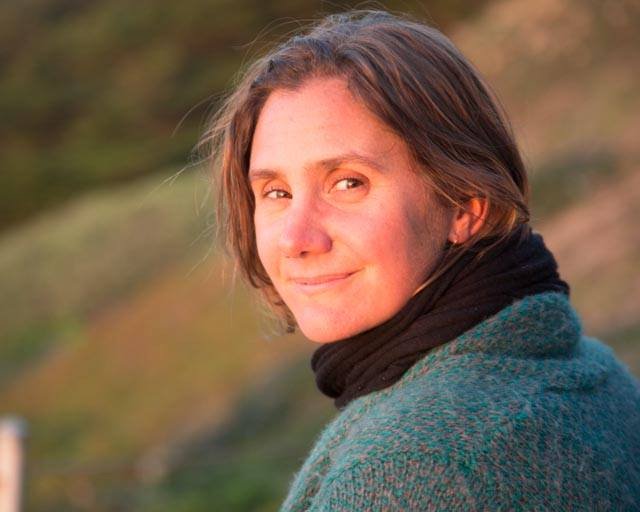
Darcy Ottey
Darcy Ottey (she/her) is a cultural practitioner, facilitator, anti-racist educator, and Co-Founder and Co-Director of Youth Passageways, an intergenerational and cross-cultural network supporting the regeneration of healthy passages into mature adulthood for today’s youth. A queer, white, able-bodied woman in her 40’s from a mixed middle/working class background, rites of passage have been part of Darcy’s life since her coming of age journey when she was 13. The descendant of Quaker settlers, British coalminers, and Ukrainian peasants, her early encounters with nature and ceremony instilled in her a deep sense of belonging and connection with the more-than-human world. Her formal and informal education brought understanding of the colonized and colonizing contexts of these experiences. Her work is all about synthesizing these experiences by: supporting white people and others with privilege in dismantling systems of oppression internally and externally; building resilient networks of relationships across difference; and building community capacity for meaningful acts of redistribution, reparations, and rematriation. Darcy is grateful for her teachers, mentors, family, and community. She loves dancing (especially under the full moon), learning to make Slavic folks dolls, and preserving food and plant medicines. She (sometimes) makes her home along the Methow River in Okanogan County, Washington, the territory of the Mətxʷú people and the many beings that survive and thrive throughout the watershed.

Calling In Our Collective Wisdom
Our small group of elders included past and present Journeys Board members, former trip participants, and supportive volunteers like myself. We assigned ourselves in groups of 2-3 to be present to witness and honor the journey of summer participants (we dubbed them “Questers”) before they depart and to recognize and celebrate them on their return.
Calling In Our Collective Wisdom
By Kurt Kutay
As an outdoor explorer and seeker of my own internal realms, I thrive in the wild and the supportive community of friends and family with whom I share my journey. The programs and people of Rite of Passage Journeys are one of my pathways to discover, learn and share wisdom for my personal and our collective conscious evolution. When I was called to be part of Journeys’ Elder Wisdom Council this summer, I loved the opportunity to serve the organization and support youth headed out on their summer adventures fostering self-discovery, community belonging and a connection with the natural world.
Our small group of elders included past and present Journeys Board members, former trip participants, and supportive volunteers like myself. We assigned ourselves in groups of 2-3 to be present to witness and honor the journey of summer participants (we dubbed them “Questers”) before they depart and to recognize and celebrate them on their return. In as much as our role is to support the Questers through our lived experience, what I discovered is that the wisdom of our Council isn’t sourced from our elder enlightenment, but more so by simply being present to hold space for our collective wisdom to unfold, as it befits and supports each of the individual Questers at the start and end of their Rite of Passage Journey.
Within hours of checking in at the Journeys Bothell basecamp and saying goodbye to their family who delivered them, each participant is directed up a path through the forest following the sound of an African welcome drumbeat to find a few grey-haired elders gathered in a “Listening Circle”, a small circle we hold sacred on the threshold of their big adventure ahead.
After friendly hellos and introductions, we ask about their family and friends they are leaving behind and gently prompt conversation about what drew them to the journey (most often it’s “my parents”). We query what they expect to happen, what concerns they may have about their adventure, and what they hope to discover. We get to know them as initiates, and, when the group returns, we are present to bear witness as the first human beings they sit with to share their stories, newfound gifts and passions they now envision for themselves and the world. One sage piece of advice we offer them is not to share anything about their experience they may not be ready to share or that they want to hold for themselves deeply and privately forever as their own treasure!
It’s truly an honor to be in their presence in this moment of their lives, to listen, to laugh and to acknowledge their strengths and accomplishments. Some are deeply personal physical or mental achievements, while for some it may be more about learning how to be present and supportive of others in their community. As Journeys elders we are already familiar with the rituals, ceremony, fun games and loving guidance that skilled and heart-centered Journeys guide teams facilitate on each trip. But nature presents itself in unexpected ways on every adventure, and each group brings its own social dynamics and shared life experiences into the mix. As a result, every journey and each experience of every Quester deserves to be heard and honored.
We get to listen to how participants are tested by physical and mental challenges in nature from leaving home and creature comforts behind (such as hot showers and home-cooked-meals), to learning outdoor skills and how they managed their Solo vigil. Some share how they learned to listen and communicate better in council circles around the fire each night, supporting each other and resolving conflict — all of which leads to a deepening relationship with nature and personal transformation in their own rite of passage.
By the way, we also invite each of the trip leaders into our circle, to give them any support they may need as they accept the responsibility as guardians and guides of young Questers, embarking together on their adventure into the wild. Every trip has an experienced lead and assistant guide, and a mentor guide, and each one of them appreciated the opportunity to be held in our sacred circle. We recognized the transition from their own busy world and acknowledged that they are not just trekking through mountains but to honor how they traverse into minds and hearts as counselors, mentors, guides and guardians. They all felt recognized and held by the organization.
Ancient traditions and modern practices of rites of passage are designed to strengthen individuals, families, and communities as a whole. Initiates learn what it means to be a responsible community member, while exploring unique personal gifts that can be used to live their best life and to serve others. Indeed, in the present context of challenging family dynamics and the multiple crises facing our world at home and abroad, the staff, guides and mentors of Journeys do this work to heal our souls, deepen our connections with others, and create community that protects and sustains life on our Mother Earth.
Summer departures for youth (and adults) are scheduled and booking up. If you are called to go out in the wild in 2022, or you know someone who may be inspired, I invite you to call Rite of Passage Journeys, and talk to one of the staff and amazing trip leaders. I have personally witnessed the transformation that Rites of Passage inspires in others. As much as I get out hiking, camping, SUP surfing, mountain biking and traveling the world, the opportunity to support others on their life changing adventures in the wild or traveling abroad is a community that brings me great joy and meaning in my life, sharing the wisdom we all bring to our world.
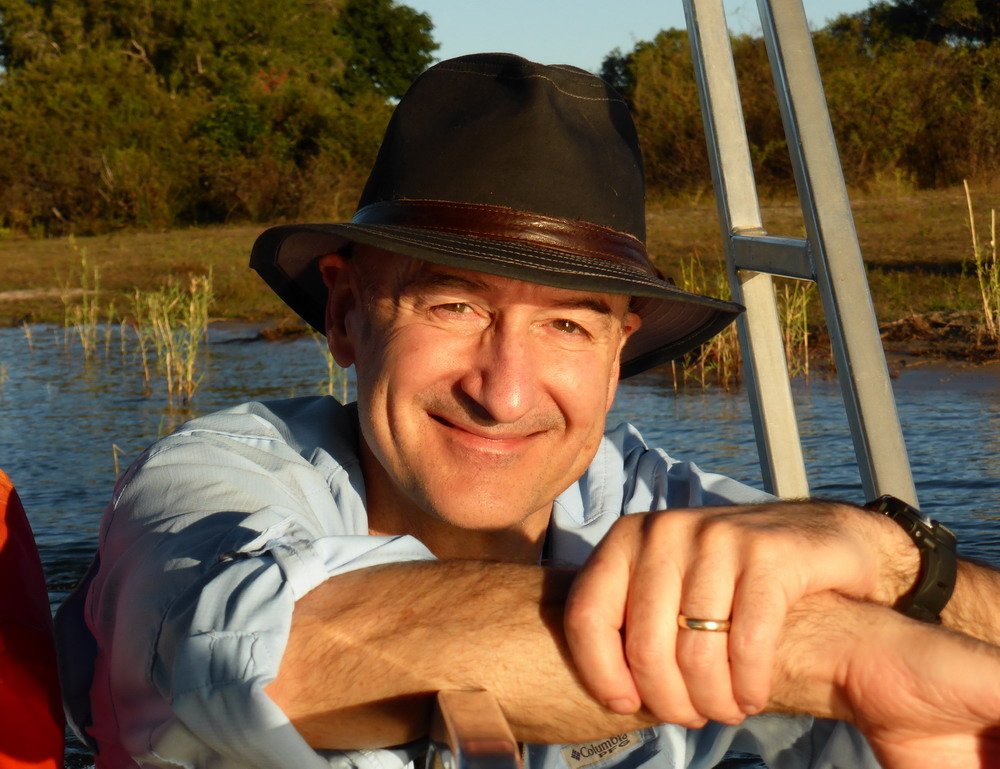
Kurt Kutay
Kurt Kutay (he/him) has led a life of adventure, exploration and self-discovery dedicated to conservation, activism and compassionate community. He is an ecotourism pioneer, having designed and led adventure trips throughout the world as the founder and former CEO of Wildland Adventures, a global adventure travel company. He currently serves as the Director of the non-profit Travelers Conservation Trust, and founding board member of the Transformational Travel Council dedicated to deepening travelers’ life-changing experiences and stewardship of nature and cultural heritage through travel.

Opening Wider Circles
Even as we celebrate the beauty and balm of connections within the circle, the emergence of authentic community by its nature invites the questions, “Who is left out and why? How do we re-dedicate our work to opening even wider circles?”
Statement of Support Progress Update
Diving deeper into support for this year’s summer programs has broken open the heart of Journeys for me with new clarity. Seeing the incredible dedication of staff and guides, the trust and vulnerability of participants and their families, and the stewardship of the Board and the wider Journeys’ circle, spiral into being as a newly woven tapestry of heartfelt community.
Even as we celebrate the beauty and balm of connections within the circle, the emergence of authentic community by its nature invites the questions: “Who is left out and why? How do we re-dedicate our work to opening even wider circles?”
Last summer, the Journeys Board committed to action and ongoing communication on its efforts to overcome unconscious bias, racism and other forms of oppression in ourselves and the circles of this organization, while staying grounded in Journeys’ vision and mission. To this end, we want to continue to report progress on our Board Action Plan.
Board Action Plan
Conduct a JEDI (Justice, Equity, Diversity and Inclusion) assessment working with external consultants to discover and reduce barriers to diversifying the Board and staff
Provide opportunities for field staff, administrative staff, committed community members and Board to engage in heartfelt discussions of race, power and privilege and participate in professional anti-oppression training
Partner with connected organizations to improve outreach to marginalized communities
Report progress on this work to stakeholders on a regular basis
Progress on Action Plan
March 2021
Board and Staff engaged in reflection and discussion as part of a multi-session training on Gender Identity and Wholistic Sexuality led by J Mase III. These conversations allowed time to unpack and examine assumptions, structures and language related to gender-identity and sexual orientation in Journeys’ work. Doing so helped us think more deeply about how we hold open the space for young people as they grapple with gender and sexual identity, how we attract and inspire Guides equipped with the experience to mentor them, and how we support families deciding which trips would best serve their youth in this regard.
April 2021
Board and Staff worked with Darcy Ottey and Kruti Parekh from Youth Passageways Education and Consulting Collective, on Transformative Justice and Repair Work. We explored principles of transformative justice in relation to our community’s historic and recent conflicts, with a focus on Journeys’ current processes and practices. These conversations revitalized a commitment to deepen Journeys’ capacity to repair the threads of connection inevitably frayed and torn as we lean into community. We’ve begun immediate work refreshing our conflict resolution processes and exploring an Elder Initiative that would include a non-governing council of elders offering support to Guides, Staff and Board on an as-needed basis.
May 2021
Janis Avery, the former CEO of Treehouse for Kids and a consultant on Social Justice and Equity issues, met with Staff and Board to provide input and resources for reducing barriers to diversity for Journeys’ Board, Staff and Guides. A Board Development Steering Committee was formed to identify, cultivate and recruit Board members who will bring diverse perspectives and experiences, and fill gaps in expertise. Focusing on fostering relationships, the Steering Committee has begun work to identify and reach out to BIPOC, Trans and Queer organizations, and individuals who are currently working in or with wilderness-based, youth service organizations. The goal is to build long-term relationships of mutual support as a foundation for possible recruiting to serve on the Board.
As all this continues to unfold, the passion and creativity of a Journeys’ summer highlights the transformative power of community and further energizes this work. I’ve experienced firsthand the dedication of Staff, Guides and Board to the continued learning and effort required to progress along this path. We’d also like to invite the extended Journeys’ community into this process, beginning with the summer closing ceremony and relaunch of Heart of Journeys gatherings (Saturday, September 4, 2021, 4-8:00pm at Songaia) as we continue to open our circles even wider.
In community,
Brian Bansenauer, Board of Rite of Passage Journeys
Related Articles

Aesthetic Appreciation in Natural Environments
In this blog submission, Zach Gardner offers some insight into the ways in which the aesthetic appreciation of natural environments can enhance our relationship with nature. He provides a perspective that unites ethical consideration with aesthetic engagement, resulting in an approach that revitalizes human interaction with the natural world.
Aesthetic Appreciation in Natural Environments
By Zach Gardner
The aesthetic appreciation of natural environments offers a gateway to the enhancement of relationship with nature. But what is aesthetic appreciation, one might ask. To begin, it is rooted in the domain of the aesthetic, which, as esteemed scholar Yuriko Saito puts it, “begins and ends with the sensuous surface.”[1] So the aesthetic experience is predicated on that which is sensible—the content that is apprehended via the sense faculties. Under the umbrella of the aesthetic experience are many prosaic activities that will be familiar to most: aesthetic judgements such as whether a thing “looks right” when placed in a particular orientation; aesthetic apprehensions like how a thing strikes us through engagement, whether of beauty, disgust, or what have you; and aesthetic appreciation, which we might call, to use Kantian language, a uniquely receptive, though disinterested (in the sense of without desire) attitude in approaching the sensuous features of a given object. The latter type, aesthetic appreciation, is especially suitable to encounters with artworks, but also, and in an importantly different way, with the objects of nature. The main difference of course being that artworks are constructed by human hands while natural objects are not. This distinction requires a different method of appreciating these disparate types of objects, leading to the development of moral consideration for natural objects which exceed the scope of human design.
To aesthetically appreciate natural objects and environments then, requires at least some degree of ethical consideration insofar as the objects must necessarily be viewed as, to use philosophical jargon, things in and of themselves. And this is where we start engaging in the aesthetic appreciation of nature—with a particularly receptive, though disinterested (again, lacking the desire to possess) attitude which recognizes the independent moral existence of natural objects. In taking up this approach, a wide variety of aesthetically-oriented experiences then become increasingly possible. One can wander into nature keen to experience its beauty as one organism among many—as a single string within the multifarious, interdependent web of ecological activity. This perspective, let’s call it donning the ecological lens, paves the way for more complex instances of aesthetic appreciation such as the sublime. Scholar Ronald Hepburn has written of the sublime at length, describing it as the concurrence of grandeur and “dread at the overwhelming energies of nature and the vastness of space and time with a solemn delight or exhilaration.”[2] Such an experience might be the act of standing on the precipice of a massive volcano, peering down into its volatile caldera which once erupted with liquid fire of a most terrible magnitude. The sublime, like most aesthetically valuable experiences in nature, is attended by an emotional response ranging in intensity.
As humans, few experiences compel us in the way that emotion does. Through it we are driven to do incredible things. Chief among these is the proclivity to step outside of ourselves and consider others with importance equal to or greater than that which we accord to ourselves. The generation of emotion is one of the primary ways in which the aesthetic appreciation of nature brings us closer to the natural world. Through the experience of beauty, the sublime, grandeur, and mysterious ineffability, our emotions are necessarily stirred. These emotional responses alter our state of being; they incite a profundity that is replete with meaning. And in these moments, we are most acutely aware of nature as something greater than ourselves, as something that we are honored to be a part of. We are brought closer to nature, returning to the embrace of Mother like the lost child who is finally reunited with her family; our intrinsic connection with the Earth and Her inhabitants renewed and restored. In this, we experience the enhancement of our relationship with nature, and it all begins with aesthetic appreciation.

Zach Gardner is the recent recipient of an MA degree from the University of Georgia, specializing in Environmental Philosophy. He is a nature-lover and currently resides at the ecovillage of Earthsong in the Athens, Georgia area.
[1] Yuriko Saito, “Appreciating Nature on Its Own Terms,” in The Aesthetics of Natural Environments, ed. Allen Carlson and Arnold Berleant (Ontario: Broadview Press, 2004), 149.
[2] Ronald Hepburn, “Landscape and the Metaphysical Imagination,” in The Aesthetics of Natural Environments, ed. Allen Carlson and Arnold Berleant (Ontario: Broadview Press, 2004), 136.
Related Articles

Soul Sparks and the Dignity of Identity - Statement of Support Progress Update
For the past six months, each member of the leadership team, both board and staff, have engaged in individual study and personal reflection on the themes of racial justice, historical oppression and our own individual biases. Each board meeting has included a relevant reading and a group discussion of progress toward fulfilling our goals. In addition, thanks to a generous matching grant from an anonymous dedicated support family, and the continued matching support of our donor community, the Board of Directors has engaged several professional development training opportunities in the coming months….
Dear Journeys Community,
In its stated commitment to being part of the movement to support the dismantling of systemic racism in our organization and in the wider culture, Rite of Passage Journeys has forged ahead with its action plan to engage in Justice, Equity, Diversity and Inclusion training for board and staff.
For the past six months, each member of the leadership team, both board and staff, have engaged in individual study and personal reflection on the themes of racial justice, historical oppression and our own individual biases. Each board meeting has included a relevant reading and a group discussion of progress toward fulfilling our goals.
In addition, thanks to a generous matching grant from an anonymous dedicated support family, and the continued matching support of our donor community, the Board of Directors has engaged several professional development training opportunities in the coming months.
In March, the Board has retained the services of J Mase III to lead a training on Gender Identity and Wholistic Sexuality. In April, the Board has retained the services of Youth Passageways Education and Consulting Collective, with Darcy Ottey and Kruti Parekh leading a training on Transformative Justice and Conflict Repair. This fall, after the rush of our summer programs is over, we will engage in a training on overcoming barriers to diversity in board and staff.
Both of these training organizations bring their strengths in tailoring what is currently happening in their fields of expertise to our specific situation, based on our organizational structure, mix of team members, and the needs of all we serve, including:
youth as they grapple with complexities in their lives, and work to clarify their own beliefs, attitudes and goals
families as they welcome and support their kids in a world that urgently needs what they have to offer
adults who are training to bring rites of passage work to their home communities, and are on journeys of personal development, helping to create a partnership of generations as initiated adults
In addition to receiving professional anti-racism training, Journeys will be creating opportunities for field staff, administrative staff, committed community members and the Board to engage in generative discussions of race, power and privilege. Together, these trainings and conversations will continue to support us in overcoming the unconscious bias, racism and other forms of oppression in ourselves and our organization, while staying grounded in our vision and mission.
In our next update, we look forward to sharing some of the insights we have gained from these trainings and community discussions, and how we can use those insights to continue to make our organization a welcome home for the individual ‘soul spark’ of each person that we serve — a welcome that is grounded in the dignity of their identity.
In Community,
Board of Rite of Passage Journeys
Related Articles
What Does it Take to Heal?
By Evie Toland
…I decided then, to make the commitment that felt absurd, scary, and truly impossible to undertake: every decision would be based on the question, "Does this help heal my body?" If the answer was yes, I would do it. If the answer was no, I wouldn't. It seemed simple enough for things like food or the appropriate bedtime, but what about when I applied it to my romantic relationship? My job? My house? Every aspect of my life - big or small, simple or complex - could be looked at through this lens and suddenly, the work felt really clear. If I wanted to heal, to truly heal, I had to get committed to radically changing my life…
What Does it Take to Heal?
By Evie Toland
To heal: to become sound or healthy again.
In the winter of 2019, I got really sick. I couldn't keep any food down for weeks. It was a stomach bug, the doctors at urgent care told me, exacerbated by my long-term IBS condition. Another yeast infection cropped up for the sixth time in a year. I lay in bed, weak, anxious and tired to my bones, as the sun rose bright and orange on the new year of 2020. I vowed to keep only one resolution: to heal.
The first few months of 2020 were no better. I tried different diets - low sugar, low carbs, low FODMAP, more smoothies, then less smoothies - but my commitment was new and fragile, and I broke easily whenever a chocolate bar would eye me from its place on the racks near the register. At the same time, I was moving to Southwest Colorado with no plan in mind - no job, no place to live, and no idea what was next. I remember sitting on a stump overlooking a small lake covered in snow, ravens circling overhead, ponderosa pines shaking dust onto my hat, and the San Juan mountain range striking my eyes with their quiet yet fierce white-tipped peaks. I barely had enough energy to walk the quarter mile back to my car, and sobs gripped my shaking chest. I had no idea how to heal my body, or my heart. But the mountains looked at me kindly, and the junipers whispered, "Stay. Trust." So I did.
A month later, the COVID-19 pandemic began in earnest and the world slowed to a screeching halt. My body sighed in relief. This, ironically enough, was the moment my healing truly began. Slowness - radical slowness - was the medicine I needed. Because it wasn't just that my body was sick and failing me, my whole lifestyle was sick and failing my body. My body was the canary in the coal mine begging for me to stop, look, listen, and to do something different. I am a hard worker, anxious with ambition and a drive that never satisfied, and rest - well, that was something that only came with collapse. In the slowing down and sinking in, while the rest of the world erupted into a panic about getting sick, I finally felt a faint hope of getting better.
I found a naturopath who could finally diagnose me with the right conditions, and therefore, get me started on a more directed treatment plan. I found a diet that allowed for my gut to take a rest too, and feel supported by simpler, easier-to-digest foods. I spent more time doing a lot of nothing; lying under the shade of juniper, listening to the solitaires and jays take turns filling the void with their voices, watching the sun move across the sky. I sang. I cried. I surrendered.
The summer passed and, slowly, my body got stronger. I could go days without any discomfort or pain. My anxiety had lessened its grip, becoming only a passing wave, a friend I could acknowledge and then move beyond. But, after 4 months of expensive treatment and concerted effort, I still didn't feel like myself. I wasn't healed. Sitting next to the drying creekbed, watching crawfish crawl towards my toes, and dizzy from heat and exhaustion after a morning spent weeding in the vegetable fields, I suddenly realized why. I wasn't actually changing anything, and my body knew it. All spring I was waiting for the chance to dive back into my busy life and when summer rounded the curve, I spent all day farming and all night bartending. I went right back to my pre-pandemic pace, only to slip right back into stagnant sickness.
I decided then, to make the commitment that felt absurd, scary, and truly impossible to undertake: every decision would be based on the question, "Does this help heal my body?" If the answer was yes, I would do it. If the answer was no, I wouldn't. It seemed simple enough for things like food or the appropriate bedtime, but what about when I applied it to my romantic relationship? My job? My house? Every aspect of my life - big or small, simple or complex - could be looked at through this lens and suddenly, the work felt really clear. If I wanted to heal, to truly heal, I had to get committed to radically changing my life.
I ended my relationship. I quit my job. I found a new home to live in. I backed out of all previous social commitments and I re-committed to my diet and treatment plan. I practiced trusting that, in the process of following the yes's to my sacred question, everything else would fall into place. It was terrifying. It was lonely. The grief came quickly in the silence of surrendering, and I let myself feel all of it. In hopes that I could share this grief with community, I participated in the Rite of Passage Journeys online grief ritual in November. As the drumming began for the ritual portion, and I began dancing around the flickering candle of my altar, I felt an intense rage towards all that had happened to me push through the walls of my disassociation and fly through the room. I punched pillows wildly. I screamed and yelled. I sobbed and cursed the doctors who had misdiagnosed me and, worse, disregarded my pain, the partners, friends and family members who stood by and said nothing as I grew sicker and weaker, the culture that pushed me to work harder than I was capable of, rewarding me only with shame for all that I had not done. But most of all, I cursed myself - for ignoring all the signs that in fact, this sick version of myself wasn't normal and for refusing the power and responsibility to change it. As the Journeys facilitator, Randy Morris, described in the ritual, the angel of grief had come to hold me, only so that at the end, she could release me into brighter clarity of the way forward.
As the drumming died down, and I held my shaking chest, I asked whoever might be listening: "Why? Why give me this path of pain and prolonged illness? What are you here to teach me?" A thought rose up from the emptiness of my gut and it said, clearly, and with relief, "Because now you know what it takes."
Images flooded in from the year - overflowing hospitals, raging wildfires and hurricanes, police shootings and white supremacist marches, families separated, oil spilling, rivers roaring with polluted rage. The Earth is sick, I realized, just like I was. Its pain is ignored and dismissed, its body used up, and its yelling for somebody to listen. What does it take to truly heal the Earth body? To heal our collective human society, which grows out of this Earth like branches to a single trunk?
It is a question so many beings are living into, fighting for, and dying for. This sickness, which had held my body tightly for 8 years, and the grief that followed and flowed after, provided a few railings to hold onto while walking my path to answer this question: It requires radical, commitment to change rooted in a single, sacred value of embodied health. It requires slowing down enough to listen to the innate intelligence in our own bodies, and in the Earth, on how to provide the conditions for this healing. It requires allowing grief to guide us towards a collective reckoning of all the trauma and pain that has happened to the land and our human communities, so that we may see the way forward more clearly.
Healing ourselves, our communities, and our ecosystems is interconnected, complex work. It is not easy or comfortable, but it is possible, and the way forward can be quite simple. We can ask, with each decision, "Does this help heal my body, others' bodies, and the ecosystem body?" If it is a yes, follow it. If it is a no, then let the hard work begin. Let us live into and embody this question in all that we do. Let us shed, break down, and grieve together, stepping into the unknown to create a collective path of radical committed change towards healing.
Evie Toland is a writer, farmer, teacher and naturalist. She loves wandering through woods in search of tracks, bird feathers, and the right words to share the beauty of this world with others. She currently resides in Southwest Colorado, on Ancestral Puebloan, Dine, and Ute land.
This is What Healing Looks Like
Snake bites in feverish dreams.
Long months of staring at sky
feeling only wisps of tenderness.
Red, hot, boiling anger erupting
in fits and spurts,
truly just like lava.
Welling eyes as flocks migrate south,
then north,
then south again.
Realizing another month has passed and feeling all the same.
Circling, spiraling, swirling, sinking.
Short, sharp dreams shatter me awake.
Finding friends in sun and moon,
river and rain.
Searching for my face in old photographs
of my parents
and finding, instead,
forgiveness.
Lying down,
arms open to sky,
eyes closed to breeze,
learning how to
breathe.
Intermittent days of surprising lightness,
perhaps, lighter than before.
Feet that walk in clarity.
Pain that sings in brilliant, fluorescent colors.
Humility.
Head bowed humility.
Knees bent humility.
Sitting with stones long enough
to hear the patient sound of a heart healing.
Strength of ancient roots reborn.
Constant confusion,
an impenetrable fog,
then, briefly,
bright, blinding sun.
by Evie Toland
Related Articles

Seeking Wholeness in a Fragmented World
By The Reverend Jennifer DeBusk Alviar
There are many stories about gardens. Some are of paradise. Others are of despair. I’d like to share with you a story about one particular garden that lies somewhere between the two. Because, life is like that. We experience our joys and sorrows. We hope to make a difference in the world. We’d like to think that we have not lived our lives in vain.
Seeking Wholeness in A Fragmented World
By The Reverend Jennifer DeBusk Alviar
There are many stories about gardens. Some are of paradise. Others are of despair. I’d like to share with you a story about one particular garden that lies somewhere between the two. Because, life is like that. We experience our joys and sorrows. We hope to make a difference in the world. We’d like to think that we have not lived our lives in vain. And when we make mistakes — because we do — we are received with the gift of forgiveness. Forgiveness, in the abstract, is hard to relate to. So let me ground this concept in the context of a story to help flesh out and embody what it means to find soul-nourishment and renewal in a suffering world.
I recently participated in a storytelling workshop series with Rite of Passage Journeys. The facilitator, Ben Dennis, invited us to tell what he called a generative story. Storytelling as an agent of social awareness and transformation. Here were some of his guidelines:
1. Choose a story that speaks to your place in the world. Draw from experience that is personal, has meaning within your community, and where you have skin in the game. Please, let’s do our best to avoid rants and grand political issues—again, be personal.
2. Focus on a trajectory; the journey of revelation, lessons learned, resolve, etc.
3. If possible, let your journey be a Gift that you share. All of us have stories that are wonderful—even the tragic ones are gifts. Be poetic, creative, and loving!
I thought about many stories I might tell. But there was one in particular that kept coming back to me. I kept pushing it away. "No, not that one,” I said. But it was one of those stories that insisted to be told. I became curious about its urgings. Why this story? Why now? I realized that it was a story about food, fellowship and forgiveness. A timely message for all seasons. In the telling of this story, it may evoke some emotion on my part. But I honor, respect and trust the gift of forgiveness and love in both our glory and our shortcomings.
So, here is my story.
It is dinner time. I am in the kitchen with my daughter, Madeline, who at that time is 9 years old. The sights and smells of the kitchen create a warm, cozy feeling between us. I am browning some meat on the skillet as we chat happily together. Suddenly, I hear a pop. Then a scream. The hot oil from the skillet accidentally spills onto my daughter’s body causing a burn on her belly.
I know we all make mistakes. Accidents happen. But self-forgiveness is hard to come by. In time, the physical wound heals. But the emotional scars remain. My daughter’s natural spirit of joy is replaced by fear and anxiety. This breaks my heart. I reached out to Madeline’s pediatrician, Dr. Lenna Liu. “Please help me,” I plead. “This cooking accident seems to have paralyzed Madeline with fear. I need some way to free her from this anxiety. How can we move from the paralysis of fear toward a greater sense of freedom, hope and healing?”
Dr. Liu is compassionate and resourceful. She introduces me to the nutritionist, Rebecca Finkel. This one, pivotal introduction forever changes our lives. Rebecca looks into my anguished face and says, “Your timing is perfect. Seattle Children’s Clinic at Odessa Brown has just developed a brand new partnership with a nonprofit called Green Plate Special. You are welcome to join a 6-week parent/child cooking class. This class takes place in a wonderful, organic garden on an urban farm. Kids gain a holistic approach to cooking, nutrition, gardening and meal sharing catered to a diverse community. I think you’ll really enjoy this innovative farm-to-table learning environment. Best of all, it starts next week!” I am filled with immense gratitude.
On the first day of class, Madeline and I open the garden gate and walk in. This garden bursts with joy, overflowing with brightly colored flowers and fresh fruits and vegetables. I take in a deep, hopeful breath. My body relaxes. Madeline runs over to the chicken coop. I don’t know what it is about chickens, but they seem to put everyone at ease. As Madeline feeds the chickens, other kids join her creating a lively spirit of playfulness, curiosity and friendship.
In the kitchen, spices and fresh herbs tantalize our senses. We learn about culturally relevant foods from around the world. First, we cook a South Indian vegetable stew called sambar. Next, we prepare and savor an East African vegetable curry dish. Then, we use our hands to shape Middle Eastern kofta meatballs grilled on skewers accompanied by fresh garden vegetables and delicious tzatziki sauce. And finally, a crowd pleasing favorite — homemade pizza with Italian tomato sauce, herbs and mozzarella cheese baked in a wood burning oven. Are you hungry yet? At the end of Madeline’s 6-weeks with Green Plate Special, she has indeed regained her joyful spirit, along with valuable cooking skills and a deep appreciation for food and fellowship.
This alchemy between food and fellowship leads me to reflect on a larger question. Each of us, at one point or another, is wounded by life. Some of our wounds are physical. Other wounds are emotional. Oftentimes, our pain is a mix of both. How can we move from the paralysis of fear toward a greater sense of freedom, hope and healing?
In my experience, the most profound truth lies in the humble prayer recited before each meal:
This food is a gift of the whole universe.
The Earth, the sky, and much hard work.
May our actions be a reflection of this gift.
In the most tender moments of life — vulnerable, raw and in pain — the earth gives herself to us. A seed was planted on fertile soil the day that I reached out for help and was graciously cared for. Madeline’s healing — and mine as well — began with four simple ingredients: a clinic, a nonprofit, a garden and some chickens. For me, it all comes down to this. On days when life feels scarce and I am short on hope, I shut my eyes and breath. I imagine myself back in that beautiful, soulful garden. Then I pray. I pray that my actions may indeed be a reflection of this gift richly given and humbly received. Here, in this garden, I find freedom, hope and healing.
This is where my story concludes. Yet in the act of telling it aloud in community with others, a new story emerged for me. What happened next evoked a curious element of surprise. This moment caught me completely off-guard. As I reached the end of my story, I felt emotion catch in my throat. Tears welled up in my eyes. I began to cry. Wait. This isn’t supposed to be happening. This is the part in my story where I bring clarity, resolution, closure and a call to action. This is the part in my story where I rise up, not fall apart. Is this a crisis of faith? Do I not affirm the inherent worth and dignity of all human beings as core to my belief system? Do I not believe in the grace of forgiveness? Is there no balm in Gilead or elsewhere for healing human pain and suffering?
When Ben recommended that we practice our stories, I took it quite literally. Each day for two weeks straight, I worked on revising the wording of my story while taking daily nature walks through the arboretum. I figured that practicing my story through speech and grounding it through movement would lead to greater integration. On one level, yes. But healing is another matter.
In talking to Ben afterwards, I came away with a truer, more honest account of the human condition. Sometimes we become strangers to our fear and grief because we can’t bear our own pain. It takes time to heal. The act of storytelling itself is part of that healing process. But we can’t force its pace and timing. In the words of Quaker singer and songwriter, Carrie Newcomer, we can only move as fast as the speed of soul.
I can imagine what it must feel like for each of us to come across a well-rehearsed narrative. Suddenly, we feel ourselves caught by emotion and surprise at the wrong part in our life story. “No!” we protest. "This is not supposed to be the part in the story where — fill in the blank — our marriage ends, we lose our jobs, we are confronted by racial injustice that challenges the images we hold of ourselves." I can understand the human impulse for a revisionist story of our personal and collective histories. But if we can be in community with others to bear our own pain knowing that we are not alone, then further healing can occur with more grace and soul.
This storytelling experience offered me a priceless gift. I discovered that what we are really practicing is not a polished version of our spoken words, but rather practicing our humanity in community with others. I invite you to name or feel your way into your own lived experiences where your humanity has been expanded through community connections, your soul forgiven for mistakes made, and your spirit uplifted, renewed and restored. Reflect on a moment where you have encountered a greater sense of healing and wholeness in a fragmented world. Breath deeply into that moment. And may you be blessed.
Amen, Shalom, Salaam, Namaste and Ashe,
The Reverend Jennifer DeBusk Alviar
*****
Special note of thanks to:
Ben Dennis, PhD, Storytelling as an agent of social change and transformation.
www.riteofpassagejourneys.org/storytelling
Green Plate Special, a local urban farm dedicated to empowering youth and strengthening communities by teaching teens valuable gardening and cooking skills.
The Reverend Jennifer DeBusk Alviar is an interfaith minister ordained in the Unitarian Universalist tradition. She received her Master of Divinity degree at Starr King School for the Ministry in Berkeley, California. Her specialty is in leadership and social change. She collaborates with schools, churches and nonprofits designed to empower youth to become strong leaders and caring citizens through community service projects. As a faith leader and community bridge-builder, her ministry also includes public speaking, writing, theology, interfaith dialogue, retreat facilitation, social justice and youth leadership. Rev. Alviar is a member at East Shore Unitarian Church located on the traditional territory of the indigenous Duwamish and Coast Salish peoples currently known as Bellevue, Washington.
Related Articles

Awakening Ecological Selfhood
By Jakob (Osiris) Ledbetter
…we live in a sort of intergenerational, cultural amnesia – unaware of the belonging we’ve long forgotten – known as shifting baseline syndrome. Though many of us in the modern world lack a lineage of intact culture to remind us of our ecological belonging, we still carry the indigenous memory in our DNA, waiting to be reawakened.
Awakening Ecological Selfhood
By Jakob (Osiris) Ledbetter
Somewhere along the evolutionary path, the majority of humanity severed their full-bodied, participatory connection with the natural world (Glendinning, 1996). We went from a deep embodiment of our natural role and responsibility amongst the ecological community, to psychologically elevating ourselves above our more-than-human kin. Humans forgot that they belong to the world as organic extensions of the environment, and that their hearts and minds are deeply rooted in nature. Today in the post-industrial, tech-driven society of first world countries, we live in a sort of intergenerational, cultural amnesia – unaware of the belonging we’ve long forgotten – known as shifting baseline syndrome. Though many of us in the modern world lack a lineage of intact culture to remind us of our ecological belonging, we still carry the indigenous memory in our DNA, waiting to be reawakened.
Once upon a time, humans lived as ecologically grounded beings, detecting the patterns of nature through a finely tuned human sensory system, experiencing the moment, and feeling intimately connected with the greater flow of life and creation (Lane, 2016). A primal need for heightened awareness optimized our sensory experience and brought us to a natural state of mindfulness. Hunter-gatherers around the world relied on (and continue to rely on) this expanded sense of wakefulness to survive, and thrive, which deep ecological theorist Arne Naess (1998) has coined the ecological self.
To embrace ecological selfhood is to embody a widened and deepened sense of being-ness that instinctively recognizes the interdependent nature of all phenomena. The ecological self identifies with the larger community of all animate life. Ecological identity consciousness is fluid, active, and constantly informed by the ever-unfolding experiences of being deeply embedded within the dynamism of natural environments. The ideology of ecological selfhood requires that one’s existence, whether human or non-human, is directly linked to the existence of all other beings. In other words, all possible threads of organic life – whether animal, plant, human, or fungi – without exception, necessarily arise, survive, and thrive co-dependently with one another.
The Great Forgetting is the colloquial term marking our departure from ecological selfhood. As the dominant inhabitants of Earth, facing the current ecological crisis occurring in every ecosystem world-wide, it is crucial that we begin to investigate the wealth of knowledge lying dormant in our ecological unconscious (Roszak, 1992): the mindful awareness our ancestors knew as moment-to-moment reality which enabled them to live in balance as fully realized Earthlings. Such an examination of what was left behind, and the reclamation of that forgotten knowledge can be streamlined into our modern psyches through an engagement in the natural world by the practices of deep sensory awareness.
As nature-divorced humans of the modern-day era, we desperately need nature-based activities and routines that imprint our psyches so deeply, that we are gently nudged to awaken the quiescent ecological self – residing in the depths of our unconscious. The ecological crisis is the result of a 10,000-year perceptual disorder in perceiving ourselves as separate from the life-source of nature.
Beginning the journey of reclaiming our full-bodied sensory inheritance is available at this very moment. The sensory awareness toolkit is inborn, and we are fortunate to have so many mentors, both ancestral and current, sharing the paths to developing deep sensory awareness skills.
I hope you’ll join us as we bring to our local community some of the awareness practices that naturally arise each summer, out on trail with the youth. This spring, Rite of Passage Journeys will launch a nature-connection series where we will dive into the topics of fire-by-friction and understanding the language of birds . We look forward to practicing deep sensory awareness skills together in community.
References
Glendinning, C. (1996). Technology, Trauma, and the Wild. In Roszak, Gomes, Kanner (Eds.) Ecopsychology: Restoring the Earth, Healing the Mind (pp.41-54). San Francisco: Sierra Club Books.
Lane, J. (2016, Oct.). Are you missing a key ingredient to your nature connection journey? [E-mail from the author]
Naess, A. (1988). Self Realization: An Ecological Approach to Being in the World. In J. Seed, P. Fleming, J. Macy and A. Naess (Eds.) Thinking Like a Mountain— Towards a Council of All Beings (pp. 80-97). Gabriola Island, BC: New Society Publishers.
Roszak, T. (1992). The Voice of the Earth: An Exploration of Ecopsychology. Grand Rapids, MI: Phanes.
Related Articles

Coffee, Death and an Ernest Discussion
By Patti Kwok
Suddenly there is a slight burst in my hope that a social embrace of death might possibly precede physical death; a revelation that despite aging and dying, I still have a place in this world. When hope dies, so does life.
"Any rite of passage, and its transition from one way of being into another, can be symbolized as a psychological experience of death and rebirth. This year’s Community Grief Ritual (November 21, 2020) and Patti Kwok’s thoughtful essay Coffee, Death and an Earnest Discussion present two different approaches to the intertwined but unavoidable realities of grief, life, and death. As I write this introduction just a few days after the end of the election, we are also transitioning into fall with hope for recovery and looking forward to the new life of spring after a most difficult year. Patti's essay introduces the novel meeting space of the Death Cafe, and beautifully expresses how it beckons us into authentic, open-ended, conversations where, to our surprise, we also discover how to be most fully alive."
- Tamara Walker, Chair, Community Program Committee
Coffee, Death and an Ernest Discussion
By Patti Kwok, Grieving Time 2019 participant
The Death Café—a solemn but creative invitation to wake up and face our own deaths and possibly create a new ethic. It has been over 40 years since the anthropologist Ernest Becker won a Pulitzer Prize for his work The Denial of Death. Becker’s main intention was to persuade us to face how irrational and destructive we’ve become in our feeble quest to deny death. As Terror Management Theory suggests, reminders of finitude often produce a desperate need to bolster psychologically protective mechanisms. But where might one go to strip away this resistant armor of immorality? I invite you for a sneak visit to the Death Café.
Intrigued by the name, I recently attended a Death Café gathering here in Seattle. Twelve people met at the Dilettante, a local café and chocolate bar, for an unusual and informal discussion about death. People of all ages and backgrounds sign up for these events on Meetup.com. On a beautiful sunny Sunday afternoon, a caffeinated and lively discussion fired up almost immediately. Within a few minutes we agreed to exchange our long table for two square ones pushed together into a quiet corner, where everyone had a chance to be heard. The waitress was extremely accommodating as she moved our napkins, water, coffee and chocolates to this more secluded section. Once settle in, we fervently began sharing our fears and frustrations about the way we handle death in this country and why each of us chose to show up for such a taboo and dismal discussion. Medical institutions and cultural beliefs about death have created an individual loneliness and isolation that only adds to the fear of mortality. Once we wake up to this face there is no turning back, and one is left with the absent God of cure; sometimes an absent God altogether. Becker described this feeling of separation as the barren loneliness of individuation. One becomes immersed in the realization that no science or faith can cure death. One woman in the group admitted that “…every time I am unhappy or fearful about something, what seems to be at the bottom of it always is my own death anxiety.”
It was good simply to have a place to admit such vulnerability and defenselessness. Perhaps the caffeine tainted brew and mutual support for our mortal wounds is what Becker intended when he described:
With the right intensity and scope of shock, we might even ask ourselves what we are to do with our lives. We might then begin to think of how again to give to people a secure feeling that their lives count, that there is a heroic human contribution to be made to cosmic life in a dialogue with a community of one’s fellows (Liechty, 2005, p. 236).
In the Death Cafés, meeting in many cities already, people from all walks of life and beliefs get together to philosophize about the other half of life that is often avoided. The objective of the Death Café project is to increase awareness of death and help people make the most of their finite lives. Bernard Crettaz, a Swiss sociologist and anthropologist, set up the first Cafes Mortels. Jon Barsky read the announcement in the Paris Independent newspaper in 2010 and decided to organize Death Cafes beginning in the UK, with Sue Barsky Reid, a psychotherapist, co-facilitating the initial groups. The wildly successful cafes sparked start ups in many funky places across the UK and other countries, in facilities such as convention centers, cafes, private homes and even yurts. Since 2010, death cafes have emerged all over the world.
After two wonderful and insightful hours of discussion between folks of various ethnic backgrounds and spiritual beliefs, the final request was to reflect on how we might be more alive in the world. The conversation was stripped bare of any simple faith, bible quotes or antidotes. At times we became joyfully infected with a more sensitive and realistic strain of death. As one woman summarized, “At 56, I am older than my father when he died. I'm four years younger than my mother when she died. Coming from the German culture, it feels natural to engage with death. I long for the opportunity to allow death to exist in conversation. It seems to me that, at all times, we can characterize ourselves as living or as dying. Both are true. Why choose between them? I'm living and dying.”
As I strolled across the crosswalk after this meeting my steps felt just a little lighter, though I also understood that physically I was two hours closer to death. Suddenly there is a slight boost in my hope that a social embrace of death might possibly precede physical death; a revelation that despite aging and dying, I still have a place in this world. When hope dies, so does life. I now sensed on a deeper level the intense vibrancy of fall, its warm palate of minestrone and fresh brioche, leaves like roasted sweet potatoes, steaming artichokes bare their throbbing hearts, red and golden beets succumb to their own decay—pendants of copper and fool’s gold surrender to sidewalk cemeteries. The cold autumn winds caressed my face and neck as I transcended with the trade winds of a warmer softer world, no longer buried by the fear of a cruel and neglectful death. In brief exchange for finitude, an intimate setting spiced with coffee and chocolate served up an earnest and caffeinated discussion about the other half of life! We decided to meet again a month from now if, one person pondered,… if I’m still here.” Now that’s a latte on our minds!
Reference
Liechty, D. (2005). The Ernest Becker reader.
Seattle, WA: EBF/UWPress.
Patti Kwok, PhD, ARNP
For 30 years, Patti, a registered nurse and nurse practitioner, has cared for individuals diagnosed with cancer in the greater Seattle community. She has worked in nationally and internationally recognized medical settings including major academic institutions and health maintenance organizations. Patti is currently directing the Cancer Survivorship Clinic at Swedish Tumor Institute where she is passionate about helping patients in their transition from active therapy to long-term surveillance. Integrating knowledge from her Ph.D. in depth psychology and mythology, Patti helps patients to find meaning in life and reclaim what it means to be human by exploring existential beliefs regarding illness and mortality. In her own life, Patti finds healing and meaning through writing narrative medicine and creative personal essays in many different forums.
Related Articles
Encounters with the Sacred
By Randy Morris, Ph.D
The goal of nature-based rites of passage work is to ‘wake up’ to the call of our deeper self in order to live a more complete life, in alignment with the unseen order of the earth and cosmos. In so doing, we fulfill the call of our destiny in service to a thriving planet…
By Randy Morris, Ph.D
Preface: The goal of nature-based rites of passage work is to ‘wake up’ to the call of our deeper self in order to live a more complete life, in alignment with the unseen order of the earth and cosmos. In so doing, we fulfill the call of our destiny in service to a thriving planet.
Life-span rites of passage imply that discerning and fulfilling this call is not a one-time event but rather a living, dynamic process that extends across a life-time, from adolescence to mid-life to elderhood and death. This imagination of what it means to be a human being on this planet is often discouraged because it is subversive to the status quo, those forces that are destroying our planet. As a result, it is important that we encourage each other by sharing stories of our encounters with this unseen order, what Thomas Berry calls ‘the dream of the earth’, one of the multitude of names for The Sacred. I would like to share one of my stories of an encounter with The Sacred in hopes that you will be inspired to share one of yours. By sharing our stories, a Beloved Earth Community is constellated and a sustainable future of Justice and Beauty begins to emerge. — Randy
______________________________________________________________________
I recently had an experience during the night that went like this: I dream of a long white vertical bag with precious stuff inside. Some kind of giant force runs their hands down the length of it, squeezing a single clear drop out of the bottom of the bag. It is caught in a beautiful gleaming golden chalice and the drop hovers there in the center. I woke from the dream with a remembrance of something I had read long ago in a book called Psyche Speaks. The author, Russell Lockhart, wrote the following:
“Aquarius is pictured as a water bearer pouring water into a pool. I like to think of this as the image of the coming time when each and everyone of us brings to a common pool the water we have gathered from our unique and individual sources, from our encounters with the unconscious. By pooling together what we bring from these moments, by telling one another what we have experienced there, by acting on the hints we experience there, by doing these things, we will, I trust, begin to create that song of welcome to the Coming Guest.” (p. 79)
As a Jungian Analyst, Lockhart is using the term ‘the unconscious’ to designate any experience that crosses our path that is ‘Other’ and, when made conscious, changes our life irrevocably. He is saying that if we act on the hints being given in these encounters, if we take them seriously as an ethical responsibility, and if we share our stories of them, we will create a song of welcome to a life-affirming future. Now in my elder years, I am being asked by this dream to consider the water I am bringing to the collective pool. What have been my encounters with The Sacred and how have they contributed to a ‘song of welcome’ to a thriving future?
And where do these encounters occur? They happen every day in our struggle to move beyond our ego identities so as to cultivate the ‘soul spark’ of our Authentic Self. They can be found in our daily efforts to work against our selfish desires, the better to purify our love for our partners, family, friends, community, bio-region and cosmos. I have found the most reliable guide on the path to Love and the cultivation of our Authentic Self to be dreams. Every night, we are given images of our psychic life that are generated by a wisdom far superior to our own and which have the uncanny ability to pinpoint the terrors and joys on the path of individuation, the way of becoming who we were always meant to be. The victories and defeats we encounter on that path generate the droplets that go into the Aquarian pool.
Another way to set up a deliberate encounter with The Sacred is to go on a vision quest, a 3- or 4-day solo fast in the wilderness. I have done 8 of these quests over the past 30 years, and the lessons I learned there are an essential aspect of my legacy. Long after I am gone, I can still be found in the transcripts of my big dreams and the records of my vision quests. So much Beauty! So much Love! So much Terror!
For example, in 1991, I sat in my vision quest circle in the midst of a desert, with the temperature climbing above 100 degrees. It was approaching noon on the day of the Summer Solstice. I was on the second day of my fast, so the hunger pangs of the first day had dissipated. That first day had been spent arduously grieving the death of my father. As the sun of the second day blasted its energy into my circle, I heard a very distinct voice say, “Be a guardian of the West door!” In case I didn’t hear it right the first time, the voice repeated itself verbatim. “Be a guardian of the West door!” “Wow!” I thought to myself, “A direct communication from the Sacred Other!” Or so I thought, until another voice in my head began to doubt what I had just heard. I recognized that voice as the product of 22 years of formal education into the scientific, religious and philosophical traditions of Western thought. That other voice, which was about 350 years old, told me that direct communication with The Sacred was merely a figment of my imagination, a mental construct of a mind that is separate from nature, encapsulated in its bag of skin, incapable of communication with the more-than-human world. I was caught in an opposition: do I trust the first voice, or the second? I was thrown into a tizzy. I realized that the answer to this dilemma had the power to shape the future of my life.
I get up to pray in each of the directions of my medicine circle, before sitting against a hot rock dressed only in shorts. Eventually, I write in my journal about how I think that, despite my doubts, I have achieved certain knowledge about the truth of the first voice, that it had indeed been a voice of The Sacred Other. But was it really? As I write the word “knowledge,” I see some slight movement to my left. Without moving, my eyes glance down to witness a three foot rattlesnake stretched out to its full length just inches from my bare foot. The snake senses me tense up. It stops and looks directly at me, its head moving side to side, its tongue sliding in and out of its mouth, smelling me. I remain absolutely still, as though my life depended on it, which in those remote circumstances, it did. After a few more flicks of its tongue, the snake moves on, slithering beyond the prayer ties that mark the boundary of my sacred vision quest site. The next words in my journal are “Holy Shit!”
In many indigenous traditions, Snake and Bear are the guardians of the West door. Was this really a visitation by an emissary of the spirit world? When I got up to trace the path of the snake in the sandy desert soil, I saw that it had entered my vision quest circle right next to the pole that marked the West direction. Be a guardian of the West Door! Snake had entered through the West portal and proceeded to curve around the center pole of my circle before making a right angle turn towards me as I sat in the direction of the South.
I was now confronted by two choices. I could believe that these events were a mere coincidence, or I could believe in a fantastic synchronicity, orchestrated by the intelligence of the earth, in which Snake revealed that the inner world of my experience and the outer world of nature were threads of one weaving, a holistic tapestry of mind and nature awaiting further discoveries. But it was still a choice to be made. A scientific explanation grounded in mechanistic cause and effect was still available. I consulted my heart … and chose the mind/nature tapestry. And by choosing a world in which magic like this could happen, the world made available to my eyes the capacity to see magic all around me. Mind-boggling synchronicities that I had previously explained away with my intellect as mere coincidences now became thresholds to new imaginal realms full of love, beauty and kindness. Lesson learned: by approaching the world with reverence, with expectations of encounters with The Sacred Other, marvelous things decide to approach me that would not otherwise be available to my inner and outer eyes.
This encounter changed my life. I had met the beauty/terror of the unconscious and it had blessed me. I have taken my guardianship of the West Door as a life-long task. It permeates everything I do, including sharing this story. Another droplet has been added to the pool of Aquarius. What drops might you be adding?
Postscript: If sharing our stories of our encounters with The Sacred, whatever that means to you, can serve as a basis for creating a Beloved Earth Community, then I hope you will be willing to share one of your own experiences. You are invited to send a description of your encounter – whether dream, synchronicity, awe-filled experience, nature dialogue, body revelation, artistic inspiration, or any other way in which you have encountered something Mysteriously Other – to blog@riteofpassagejourneys.org . Your gift will be gratefully read. If an opportunity presents to share your offering with the larger community, we would contact you in advance for your permission. It would be a real blessing to hear from you!
Related Articles

Repairing the Circle
By The Reverend Jennifer DeBusk Alviar
The shadow-side of a circle, however, is that it can serve to demarcate center from margin, insiders from outsiders. Consider the power of the mythic imagination to shape the narrative of the Great American West. Who gets to tell the story has everything to do with who wields the power….
The Reverend Jennifer DeBusk Alviar
I invite you into the mythic imagination of a landscape. Picture yourself paddling in a small, yellow kayak on a clear lake nestled in the woods. Towering evergreen trees outline the contours of a circular lake. It is early in the morning. The sun is just rising. The morning glow casts a bright light on one half of the lake, while the other half remains hidden in the shadows. What a bittersweet metaphor. This geographical landscape of the Pacific Northwest calls me toward deep soul work around my own interior landscape of hope, longing and heartache in relationship to my ancestors.
Growing up, I experienced much joy and pride in the stories that my mother would tell me of her pioneer great grandparents. In 1875, her great grandfather, Richard Carnine, served as captain of a train of 49 covered wagons navigating the rugged terrain from the Midwest to the Pacific Northwest. This included the traditional territory of the indigenous Osage people currently known as St. Louis, Missouri, to the traditional territory of the indigenous Cowlitz people currently known as Vancouver, Washington. After a long day of travel, these pioneering families would circle the wagons at night to gather everyone safely inside. I envisioned the image of a circle as a place of warmth, hearth and community-building. It inspired storytelling and songs shared around the campfire. When I faced challenges in life, my mother reminded me that I had pioneer blood in me. I was strong and courageous like my ancestors.
The shadow-side of a circle, however, is that it can serve to demarcate center from margin, insiders from outsiders. Consider the power of the mythic imagination to shape the narrative of the Great American West. Who gets to tell the story has everything to do with who wields the power. In the case of my ancestors, the overarching narrative passed down through history books and family lore is the heartbreaking story of colonization. It speaks to the painful narrative of broken promises of land treaties and the erasure of indigenous people’s proud culture and heritage.
This is why I intentionally use the words “traditional territory” to acknowledge the land on which I live, work and love. This land acknowledgment places me in a posture of humility. As a descendent of white settlers, it reminds me that I am a guest on indigenous people’s land. The least I can do is be a good steward of this land by honoring and respecting the people who have come before me.
I am that person paddling in the small, yellow kayak on a clear lake nestled in the woods. I feel myself rocked on the waves and generations between the past and present, between the human and more-than-human world. In 1938, my grandparents bought a rustic summer lake cabin and joined with other family cabins to fish, swim, hike and kayak. It is located on the traditional territory of the Cowlitz people along the Columbia River Gorge. For me, this place feels sacred. It holds a storehouse of memories marking my most significant rites of passage from childhood, adolescence, marriage and motherhood.
I scan the landscape to try to make sense of my place in the world. How do I help repair this broken circle of trust and move toward greater healing and wholeness in relationship to the indigenous people of this land? As I gaze up at the mountainous terrain before me, my eyes rest on a familiar land formation — the Sleeping Giant. The towering evergreen trees outline the shape of an eyebrow, nose, chin and sloping belly. I have viewed this landscape countless times. But this time, it stands out to me with new meaning. The Sleeping Giant’s form is hidden in the early morning shadows. In mythopoetic terms, the West symbolizes the Muse — an archetype of mystery, dreamwork and shadow work.
What an intriguing paradox. When it comes to matters of the heart, especially a broken heart, our well-honed defenses are too strong to penetrate through our conscious mind alone. This is where the power of dreams comes into play. The subconscious mind of dreams helps us bypass the rational mind to engage in more creative, holistic ways of accessing meaning. So the ultimate question becomes this: If our own challenging, historic reckoning with the American West is hidden and asleep in the shadows like the Giant, who or what will wake us up and move us toward social change?
This answer, I believe, lies within an even larger paradox. Some of the greatest spiritual leaders were sages disguised as fools. Tricksters and prophets from the world’s wisdom traditions used koans, parables and riddles to uproot the status quo. In their own inscrutable ways, they bypassed the rational mind into a more whimsical yet revolutionary way of enacting change. These mediators, if you will, entered through the back door, the hidden gate, the pathway to surprise in order to up-end business as usual. For example, consider the lyrics to this hymn by James K. Manley called Spirit:
You call from tomorrow,
you break ancient schemes.
From the bondage of sorrow
all the captives dream dreams;
our women see visions,
our men clear their eyes.
With bold new decisions
your people arise.
I sit quietly in my yellow kayak humming these lyrics while taking in the natural world around me. I experience a gentle movement of the waves beneath me. It feels soothing and consoling. Next, I am stirred by a slight breeze in the air. It heightens my senses and brings me to a more alert stance. This sensory meditation calls forth a few more stanzas from this same hymn.
Spirit, Spirit of gentleness,
blow through the wilderness calling and free,
Spirit, Spirit of restlessness,
stir me from placidness,
wind, wind on the sea.
Imagine holding in tandem the gentle and wild spaces of the natural world, alongside a restlessness that stirs our spirits toward enacting a more just world. A circle is a sacred center. When we feel held and witnessed in a communal circle of trust, we are able to honor the multitude of human emotions from grief and loss, to healing and wholeness. By embodying simple rituals of music, dance and prayers, we hold space for the possibility of grace.
This is the power of the mythic imagination. This is the role of tricksters, prophets and sages. By awakening our senses, they help connect our own personal stories of hope, longing and heartache within a larger collective narrative of liberation. My prayer is that together we may help to repair the broken circle of trust with indigenous people so that we may rebuild a sacred center. Within this sacred center, let us hold space for the possibility of grace. May it be so!
*****
Know the Land:
Native Land Digital: https://native-land.ca
Hymnal Credits:
Hymnary.org: https://hymnary.org/tune/spirit_manley
*Note: I have maintained the traditional wording of this hymn for legal purposes. In our Unitarian Universalist tradition, however, we have adopted the term “siblings in spirit” when referencing women and men to reflect more gender-inclusive language in support of the LGBTQIA+ community.
The Reverend Jennifer DeBusk Alviar is an interfaith minister ordained in the Unitarian Universalist tradition. She received her Master of Divinity degree at Starr King School for the Ministry in Berkeley, California. Her ministry encompasses public speaking, writing, theology, interfaith dialogue, retreat facilitation, social justice and youth leadership. She is a community bridge-builder in the broadest sense. The Rev. Alviar is currently engaged in multiple nonprofits focused on wilderness, ritual and eco-theology. These organizations include: Rite of Passage Journeys, Youth Passageways and Waymarkers. She is a member at East Shore Unitarian Church located on the traditional territory of the indigenous Duwamish and Coast Salish peoples currently known as Bellevue, Washington.
Related Articles
Meeting Our Herbal Allies
By Stef Frenzl
I’m drawn to wild, medicinal herbs. There’s something about them that captivates me more than the cultivated varieties. I believe it’s because I see parts of myself in these wild beings, as though they are a mirror for me to deepen my own understanding of myself. I’m drawn to them because they have what I long for…
I’m drawn to wild, medicinal herbs. There’s something about them that captivates me more than the cultivated varieties. I believe it’s because I see parts of myself in these wild beings, as though they are a mirror for me to deepen my own understanding of myself. I’m drawn to them because they have what I long for — a connection to wildness, nature and healing. I sense a deep, soulful remembering of my own healing nature and wildness when I’m around them.
They also connect me with the grief I carry, because I have become more domesticated than I would like to admit. Or maybe it’s because our dominant culture sees these wild plants as weeds, and I feel they’re not given the respect they’re worthy of as fellow beings, with their own will to express life in their particular form.
I’m also drawn to wild herbs because they make the best herbal medicines. Over the years, I’ve become an amateur herbalist, and it’s one of the greatest joys of my life. Many wild plants can be used to make tinctures, teas and poultices, infused oils, lotions, salves and more to help us heal all sorts of physical ailments. They can ease rashes and stomach aches, remove the pain from bee stings, help us heal broken bones faster, and so much more. Some wild plants can also support us emotionally — they can lift our troubled mind from a stressful day, or nurture a broken heart in times of grief. The blessings these herbs offer us is profound, and it touches me deeply knowing we can work with them as allies for our own health and wellbeing.
As with many worthy endeavors in life, it’s taken a long journey for me to gain the knowledge I’ve come to carry. And, I’ve forgotten way more than I will ever remember. It can be humbling in that way, but it can also be incredibly fun and easy to get started. Making herbal remedies is quite simple, actually. Most remedies are much easier to prepare than most dinner recipes. And, it’s amazing what a person can learn in just a few short hours with a good teacher.
One of the recommendations I offer to anyone inspired to learn the joys of this craft of wild herb medicine making is to build a personal connection with the herbs themselves. In my opinion, the effort to form a relationship with each plant you work with is probably the most important aspect of the craft. Many herbalists call the plants they work with herbal allies to honor this relationship.
The fascinating nature of working with herbs, in my experience, is that each species has its own personality of sorts. And each plant species can form a unique relationship with you. It’s a lot like your human friends: the quality of each relationship is different. Bob might be your friend who you love to go on grand and playful adventures with, and Monique may be the one you usually turn to for soulful conversations. Relationships with herbs are similar. Each herb helps you heal and access different aspects of yourself — fun, play, adventure, quiet conversations, and more.
Here’s an example. Hawthorn, a tree found in parks and along neighborhood sidewalks here in the Pacific Northwest, has two main characteristics for me. First, it’s a plant that is connected to my heart. The leaves, flowers and berries help me open my heart when I am feeling closed-hearted, and, just like a trusted friend, they literally soothe my heart when I’m grieving. Medicinally, Hawthorn berries are used for diseases of the heart and blood vessels such as congestive heart failure, chest pain and irregular heartbeat. It also regulates blood pressure and lowers high cholesterol. Hawthorn is a good ally to know!
And so over these past few months, as Covid-19 has disrupted our lives, and as so many people are losing their lives from this pandemic, Hawthorn has been a trusted friend to help me stay open-hearted, and to keep me from going numb and closed as I witness the destruction and chaos of these dark times.
And yet, at least for me, there’s also a playful trickster aspect to this plant. I sense a spry, wryly nature to it, and it ignites this same nature inside myself. Maybe it’s because I learned its connection to Irish folklore on a pilgrimage I took to Ireland a few years ago.
In Ireland, Hawthorn trees are known as fairy forts, or portals, where the Sidhe (pronounced “shee”), the Fairy people, enter this world from under the Earth. People in Ireland tend to stay away from places where the Sidhe may reside, as they are known to be tricksters, and there are many a tale of the fairies abducting people and playing unfriendly tricks on them, and other stories where the Fairies kill people outright. In our modern American culture, many may view this as “just folklore” and superstitious nonsense. In Ireland, however, many have a very different perspective, indeed. There is a sense of being deeply rooted to their ancient tales, and many still treat the Hawthorns with deep respect as a result. It’s said that if you cut a Hawthorn tree down, the fairies will get their revenge on you.
To indicate how real this is for many in Ireland, the upgrading of the National route from Limerick to Galway in County Clare was delayed, rerouted and eventually opened nearly 10 years after it was supposed to have started, apparently all because of a Hawthorn tree that was in the proposed pathway of the new motorway. The delay began over an objection raised by a local man, folklorist Eddie Lenihan, on the grounds that this Fairy Tree marked the spot where the Fairies from the province of Connacht meet the Fairies of Munster, in times of battle between the two forces. He said that damaging the tree would bring on the wrath of the Fairies not only to the construction workers, but also to motorists driving over the former location for many years to come. He said, “It is sacred ground, it doesn’t revert to being a normal place.” The tale was covered by National and International media, and a decision was made by Clare County Council to fence off the tree to protect it during the works. And this happened in 1999!
Depending on who you talk with in Ireland, there are differing stories about whether the motorway was deliberately re-routed to protect the tree; however, from an aerial view, the road does have a curious bend that seems to avoid the tree intentionally. Regardless of whether the motorway was intentionally re-routed, it’s much less likely that a Hawthorn tree, or almost any tree for that matter, would cause such a delay here in the United States. The Irish connection to and reverence for the land and myth is still very much alive.
Another example of this reverence for nature is at many of the thousands of sacred wells in Ireland. Near many of the sacred wells, you will find a Hawthorn tree that’s been planted near the well long ago, and prayer ties hang from its branches and flicker in the wind as a way of honoring the spirits of the land and sacred well water. These trees are seen as sacred, indeed.
For me, Hawthorn also connects me to the mysterious, sacred and reverent, but also playful and trickster-like aspect of my inner nature. When I am feeling sluggish and lazy, sometimes a dropper-full of hawthorn berry tincture does just the trick to help me access a better, more vibrant and alive mood. I also sense a deep connection to this plant in a way that I can’t consciously understand. I feel a deep union with Hawthorn that feels beyond the bounds of time, as if somehow my Irish ancestors are remembering their relationship with Hawthorn through me. I feel more whole when I connect with Hawthorn in this way. The experience is deeply connecting and personal.
Hawthorn is just one example of how herbal allies can support us. There are literally hundreds of others, too. These allies can offer everything from healing a cut to helping us find deep connection and wholeness. The good news is that wild herbs are all around us, many even right outside our front door, and I believe they are beckoning us to connect with them, to help us reconnect with the old healing ways.
As summer turns to fall, I invite you to deepen your connection with one of these herbal allies. Go outside, quiet your mind and open your heart. Wander off the trail until you feel allured by a particular plant, and sit down next to it without trying to identify it. Introduce yourself and see what happens. Maybe this one could be a new life-long ally.
1. www.webmd.com
2. www.irishtimes.com; May 29, 1999
Related Articles

Statement of Solidarity
In recognition of these pivotal times, Rite of Passage Journeys acknowledges the devastating effects of the ongoing oppression and marginalization of black communities in our society. Journeys is committed to being a part of a broad collaboration in support of dismantling systemic racism.
Dear Journeys Community,
In recognition of these pivotal times, Rite of Passage Journeys acknowledges the devastating effects of the ongoing oppression and marginalization of Black communities in our society. Journeys is committed to being a part of a broad collaboration in support of dismantling systemic racism. In this effort, we are dedicated to understanding the different ways that we as an organization, and as individuals, can contribute to ending the racism that persists in our inherited cultural structures, values and systems.
As a predominantly white-led organization, with a white board and administrative staff, we are aware that it is not sufficient to state our good intentions, or solely share the ways our current work is not harmful to people who are oppressed. Instead, we must continue to improve actively on being anti-racist throughout our organization. At the same time, we must ground our anti-racism work in the vision and mission of our organization.
Vision
Our vision is a world of vibrant, multi-generational communities in which all people are guided to recognize and give their gifts in service to a thriving planet.
Mission
Rite of Passage Journeys fosters self-discovery, community belonging and connection with the natural world in youth, adults and elders. Through contemporary rite of passage experiences and education, we initiate soulful leaders for the next generation. We guide wilderness retreats and adventures for ages 8 - 80+ and provide training, mentorship and support for schools, organizations, houses of worship and individual leaders. We honor soul-work, deep human values. Our heart and soul is supporting kids to transition into adolescence in conscious, healthy, mentored and empowered ways through wilderness rite of passage experiences.
In striving to fulfill this vision and mission, Journeys has always been guided by the individual ‘soul spark’ of each person that we serve, no matter their race, color, religion (creed), gender, gender identity, gender expression, age, national origin (ancestry), disability, marital status, sexual orientation, or military status. As an Earth-based organization, we have always believed in the interconnected Web of Life as a source of wisdom and guidance. This reflects the same foundational belief that motivated Martin Luther King, Jr. to say that all beings are engaged in “an inescapable network of mutuality, tied into a single garment of destiny. What affects one directly, affects all indirectly. We are made to live together because of the interrelated structure of reality.”
This vision unites the quest for ecological sustainability, so central to the work of Journeys, with the quest for social justice. We know that environmental, economic and social justice are threads of one weaving. From its origin over 50 years ago in the Institute of Cultural Affairs, an organization dedicated to creating healthy communities grounded in equality and collaboration, Journeys has maintained a commitment to justice work. We have a robust scholarship program and have never turned away a youth or adult from programs due to finances. In collaboration with queer colleagues, in 2018 we began offering summer Queer Quests to support LGBTQ2IA+, Gender Diverse, Queer and Trans Youth. In our leadership training programs for guides and mentors, we partner with social justice leaders, to inquire into the intersections of colonization, ancestry, trauma and initiation. These programs also explore the issues and opportunities raised by working with youth of diverse backgrounds in gender, sexuality and ethnicity, as well as how to engage in ceremonial practices that respect diverse spiritual orientations and cultural frameworks.
But we can — and must — do better. We embrace this opportunity to look more deeply at our organization for hidden assumptions and biases that inevitably result from a predominantly white leadership group. While remaining true to our mission, and mindful of the current pressures of fundraising and delivering summer programs in the midst of a pandemic, the Board of Rite of Passage Journeys commits to support the efforts of dismantling systemic racism in the following ways:
ACTION PLAN
Retain an outside consultant to conduct a JEDI (Justice, Equity, Diversity and Inclusion) assessment of our entire organization
From the results of that assessment, commit resources and take action to:
Discover and reduce barriers to diversifying our Board and staff
Provide opportunities for field staff, administrative staff, committed community members and Board to
Engage in heartfelt discussions of race, power and privilege
Participate in professional anti-oppression training
Partner with connected organizations to improve outreach to marginalized communities
Report progress on this work to stakeholders on a regular basis
Through this JEDI assessment and subsequent action, Rite of Passage Journeys will play its part in the much larger task of eliminating systemic racism, striving to overcome the unconscious bias, racism, and other forms of oppression in ourselves and our organization, while staying grounded in our vision and mission.
In Community,
Board and Staff of Rite of Passage Journeys
Related Articles

Deepening Grooves
By Tamara Walker
One night I was sure I was going to lose her, and on my way home I walked into the black forest along a trail we shared for years and a hooting barred owl called to me in my grief.
By Tamara Walker
Dear Journeys Community,
The story in this week’s blog is longer than usual. I wrote it a few years ago, just weeks after my husband and I euthanized our 16-year-old canine companion, Kali. At that point, I’d been a veterinarian for many years, and the journey saying goodbye to Kali was a collision of two worlds for me. I was the owner of the clinic at which my dog was being euthanized, saying goodbye to one of my most beloved friends in the world. But, at the same time, I also held memories of all the dog and cat families whose grief I’d been present to in their own goodbyes in the exact same room. I still miss Kali almost every day, but now the missing feels like a testament to the depth and staying power of love rather than the sharp pain of losing something vital.
We’ve chosen to publish this piece on Journeys’ website because we believe it holds some of the grief, and the love, and the questions, we’re all struggling with as we move through Covid-19 and what it means for our lives, our country, and our loved ones. I’ve always felt that engaging with difficult questions involving our animal family members allows us to have conversations that carry less baggage, guilt and regret than our far more complicated human relationships. At the same time, the love we have for our companion animals is real and moves our hearts in the deepest of ways. So, I share this because it’s like sharing a piece of my heart with all of you in one of the most challenging times our country has ever faced – and perhaps gives us hope that our enduring memory of this time can also transform to one of love rather than loss.
Deepening Grooves:
Honoring Grief and Loss in an Old Dog’s Goodbye
In that moment before waking, when a dream might still be floating if I could just catch it, remember to remember, it comes to me. The fog rises, slowly at first, like I know something’s not right but I just can’t quite….“Oh. Our brown dog’s in our freezer.” She’s with our American Alps cow, because two years earlier, I checked the wrong box, and we were delivered half a cow instead of a quarter, and it had taken an eternity to eat all the beef. I’ve wanted to call the cow something for a long time now, but not knowing her/his gender, I get stuck between Bessie and Ferdinand, thanking her for his life every time we have meatloaf, spaghetti, steak. Our freezer had been a small sample of my life, its blocks of meat organized in walled off compartments according to size, use and texture, but Kali’s arrival changed it into chaos. Our brown kelpie dog with amber eyes and fruit-bat ears was now a shocking resident of our freezer.
My husband, Steve, and I euthanized her a few weeks earlier in my veterinary hospital’s exam room #9. I found the whirring of her intravenous pump, the pale lamplight, and the brown leather couch surprisingly comforting. I worked as a veterinary surgeon in this same clinic for ten years and shepherded many other people’s beloved dogs and cats into another life in this same room. Now it was my turn to feel my heart twist in place.
A year earlier, my colleague and friend performed emergency surgery on Kali to remove a cancerous intestinal mass that was leaking bowel contents into her abdomen. She was so sick, she spent several nights in our ICU before and after. I’d go home at night, but often couldn’t sleep, so drove back to work in the deepest part of the night. I’d take her to my office, wheeling her fluids with her bed tucked under my arm, while she slowly followed me down the hall. Curling my body around her on the floor, I whispered words begging her to stay. One night I was sure I was going to lose her, and on my way home I walked into the black forest along a trail we shared for years and a hooting barred owl called to me in my grief. I didn’t know if Kali was leaving or staying, but I pleaded with the universe for just a little longer.
After that, I savored each day we had like a beloved poem with a glass of cabernet. Borrowed time is a precious gift from modern medicine when it returns to you something you’ve understood to have lost. It’s an opportunity to relive memories while making amends for past regrets and guilt. I hate fast-food hamburgers, but I’d go through the drive through and buy two, one for her, and one for me. We took extra walks at the beach, and I relished her heavy head on my body at night, reminding me she was still there. I loved how she ambled along with her asymmetrical lumps or splayed out on the floor to rest content when her tired old legs gave in.
Kali and I said goodbye in pieces. Toward the end, I expected her death and would wake up in the morning, roll over and hold my breath until I saw her breath on the floor beside me. Still there. Her mind also started to leave, as she drifted farther and farther into a world of her own making, and we lost each other in her growing anxiety and confusion. Our attachment became so thin I could barely understand her panicked eyes and panting tongue. I’d let her outside to pee and she’d forget why she was there. Anti-anxiety medication calmed her, but then her weak legs slid out from under her, and her life became a skating rink of slipping carpets and wooden floors. One time, I bought lime-green grippy rubber paw-boots, but they didn’t fit, and she immediately shook them off in disgust. I tried Paw-Friction, crazy blue micro-balls of rubber that I glued to her feet, but two days later we went to the beach and her sandy pedicure rubbed them off. Another time, fifteen feet from me on the end of her extendable leash, she thought she’d been abandoned. I cried as I reeled her in, waving my hands and shouting her name, hoping to penetrate her terrified haze.
One day, Steve and I were watching TV while Kali panted, fell down the stairs, and pressed her head into corners as if she’d find some salvation there. Not knowing how to help was so frustrating. “Kali! What do you need?” I begged as I laughed and cried at the absurdity of her enormous satellite ears scanning for sounds only located in the past. I tried to ignore her, then gave her treats, water, a bed. Finally, she peed a huge puddle right in front of us between the couch and the screen, a desperate dog’s attempt to yell back at me. I’ve never been so clearly told or felt such paralysis to understand. Until then, she seemed immune to time, but that night she gathered it up and dumped it in front of me. I knew the final day had come when I came home to our broken house strewn with the history of her lonely day of pain and confusion: a broken mirror, feces on the floor, and a look of panting terror in her eyes.
I carried her in my arms to the car but stepped on a wasps’ nest as we were getting into the back seat. As the car swarmed with wasps, and I yelled at Steve, Kali and I were both stung multiple times. I’d had an allergic reaction the last time I was stung by wasps and so as inner and outer worlds collided, our car and the drive to the veterinary hospital became a mirror of Kali’s panicked world that we all descended into together.
Not matter how often I participate — as a veterinarian, or as an owner — I never get used to the complicated fact that euthanasia is a choice. Sinking into saying goodbye to Kali, its old familiar question haunted me: Was today really the right day? Could we change our mind and wait a little longer? Kali drifted about the room on wobbly legs with her hair falling out in clumps and plastering my clothes. My sobbing caught her attention, and she came to me, concerned about the noise. I desperately wanted her not to worry about me and shoved my emotion down for later. She still knew, just before going, that something was wrong. I thought I too would die, as she looked at me with her big question mark eyebrows and seemed to ask, “Is something happening to us?” She licked my nose and tried to get up and leave before she was gone: gone, asleep, then gone GONE.
In the quiet of the room, and the whirring of the IV pump, to both Steve’s and my horror, I blurted out: “We have to take her home.” Before saying goodbye, I told Dr. McNabb we wanted a private cremation, ashes back and a paw print too. But suddenly different words poured out of my mouth. “No, no, I need a coffin please.”
Although this need for a coffin was surprising, it had its roots with another dog I euthanized 16 years earlier. Kruger, my big-hearted Doberman, had died unexpectedly when he was just nine. Kruger and Steve had an uneasy relationship because Kruger was jealous, and Steve didn’t really understand dogs. Kruger regularly put his long legs against the wall and pushed Steve out of bed. We were all adjusting to Steve moving in and me studying for surgery board exams, my home office a white storm of research papers and textbooks. Kruger and I took occasional afternoon runs through the Palouse’s rolling dark hills, but one day he could barely keep up. I thought he was just getting old, but that evening he hung his head over his water bowl, and I knew something wasn’t right. A little later Steve and I were downstairs watching basketball when we heard a yelp and a thump. Running upstairs, we found his big body seizing on the floor.
Together, as we carried his rocking, knocking body to my car, Steve asked, “Do you want me to come?” He stood on the street and watched me drive away, not yet knowing how much a woman could love a black and brown dog, or that such questions answer themselves, but too late. We spoke of that moment for years afterward, me saying how abandoned, horrified and bewildered his question made me feel as Steve gradually understood that Kruger had been a part of me, a family member, and not “just a dog.” We grew closer as we started to share this relationship with our animals, and by the time we were saying goodbye to Kali, we were grieving together.
After three days of tests and medications and Kruger lying in a coma in ICU, I chose to euthanize him. I desperately wanted to know why he died and agreed to a necropsy — a dog autopsy. But I couldn’t escape my training, and was haunted by images of him in pieces, laid out on the sterile steel table, his inside and outside jumbled together in piles. The final report named his cause of death “liver abscesses,” but this dissatisfying answer just became another impossible question. Liver abscesses? Why? Why? Why?
Science rarely answers the most meaningful questions in our lives. Perhaps Kruger’s death and necropsy were why I suddenly knew, without considering what we’d do with her body, that I couldn’t leave Kali in the clinic. So many of us leave the bodies of our beloved pets behind at the vet when they die. Before Kali, I never considered doing anything else, and it’s amazing how hard it is to break old habits, but I may never leave another animal I’ve loved, dead and alone, their spirit suddenly gone, wide eyes staring.
After Kali’s body relaxed and I knew she was dead, I wanted to scream, sob and melt, but the business of taking her home calmed me. Folding her into the cardboard coffin, Steve and I carried her out to my Mazda, which was still covered in the doghair and wasps of our wild ride a few days earlier. Driving home with her body in her familiar place in the back, I felt quiet inside. In the past, I left many animals' bodies behind in the clinic, and I was surprised by the difference, and how Kali still seemed partly present. This body goodbye was gifting me a more gentle leaving than I had experienced before.
Arriving home, Steve and I negotiated over her coffin in the back of the car. I wanted to carry her inside and let our three cats see her body, but he loved the cats deeply too and was afraid of traumatizing them. I thought they’d want to know what happened, and not just have Kali disappear forever. The protective father in him deferred to my veterinary knowing and we carried her inside. Her body was still soft, and I tried to curl her up in a ball, and gently close her eyes, to prepare her for her time of sharing space with the cow. "What are you doing?" Steve asked, as I pushed her into the corner of her cardboard coffin, took her stiffening limbs and her cold brown nose, and tried to wrap her up in herself and her blanket. "I’m trying to make her small," I said.
Wild Gala was the first cat on top of the cardboard coffin: sniffing, smelling and circling. She was the oldest, the leader, and the most attached to Kali, and she showed the way. Soon enough all three cats were seriously investigating. When Steve and I opened the lid, Gala's surprise and confusion was obvious. Why was Kali so still? She circled and circled and looked and circled. Finally, a small gentle paw reached across the divide of cardboard and blanket, and the living and the dead, and Gala tentatively touched Kali’s frozen face. We then watched her consider walking across Kali’s body, gingerly testing with a step or two, but deciding definitely “No.” Little Moon also touched Kali, but Raven stared with wide yellow eyes. What was this? Gala balanced awkwardly on the adjacent folded cardboard lid and searched for another perspective as if she might find an answer there. Finally, we all sat in quiet darkness and got used to Kali’s still presence. Later, we left them alone for a while and gave the cats space to do what they needed without watching.
In the late evening, I moved Kali to our bedroom. In her coffin, covered in her blanket, she slept that night beside me, as she had for years. I’d wake disorientated, remembering something was wrong before remembering what, but I was comforted by her presence throughout the night. About midnight I noticed the smell: a subtle musty forest floor being turned over. The smell of death. How many of us spend the time to learn its early subtleties, like thin smoke catching in a spider’s web? It grew, becoming green, and old, and sweet as time wore its groove through the night. Its changing character, complexity and light persistence surprised me. I expected death to be heavy, overwhelming, pungent, but here it was entering the room in small steps. By morning, I became afraid of the mess that might be gathering, but there was none, and the odor was her whole body transforming.
Steve and I carried her heavy body through the quiet morning to the freezer and the cow. I said to Steve, “I don’t know why they’re so heavy when they’re dead.” Maybe it’s because a soft, alive body drapes itself in your arms and molds itself to yours, but when they're dead and all angles, their heaviness has no center, like a tipping awkward piece of furniture, corners without handles.
I dreamed of a sea burial for Kali, imagining her big brown ears filling with ocean water and her body gently drifting to the seabed far below. But this was complicated and illegal, and we cremated her instead. I don’t know how we learn to say goodbye to the beings we love, but I discovered a ponderous approach gives the mind opportunity to catch up with the tears. Death doesn’t have to be sudden and shocking. There is an in-between where the soul takes time to say goodbye to a dead body, where green and musty are welcome guests, and paddles made of tears can even send the non-human beloved in their canoe across the water to the far shore.
Those first days after we “put her to sleep” my mind jumped with shock and surprise, trying to find a place to rest. My dad was life threateningly ill at the same time, and the space between dog and no dog seemed as impossible as the space between dad and no dad, but the dog was in the freezer, and dad was still in the hospital having his own cosmic negotiation. The truth of life was falling like a hammer: Everything you love you will lose. I wondered, would I have said “No” to the broken dog with the giant ears and wild golden eyes knowing I’d have to say goodbye in 15 years? But I did know, didn’t I?
Why do traumas layer themselves? Each new one relives and re-remembers the parade of our lives, and saying goodbye to Kali, I find the eyes of a lifetime of loving animals lined up behind her. My heart hurts. It feels a cracking, a catching, like maybe if I waited a second too long, I’d stop breathing too, because I forgot, or didn’t want to, or it just hurt too much. I also discover I’m mourning most the Kali I used to have, while feeling peace for the confused and anxious one just I lost.
A favorite memory surfaces from our climbing trip to the desert many years ago. I say to Kali in her new place without me, “Do you remember when you and me and our camper van went on our extended climbing road trip?” Steve joined us for a few weeks and he and I climbed Castleton Tower, a spire of Utah sandstone, while you stayed at the base with our gear and some water, living life in dog time. Halfway way up the tower, Steve and I stopped a while to watch you burning grooves in the sandstone, running dusty laps around the base. We laughed as we watched you run by again and again, your long tongue lolling, running for the sheer joy of it. I feel you out there again, running laps, waiting for your people to come down out again out of the sky.
Tamara Walker
A wilderness rite of passage doesn’t begin when a participant arrives at the trailhead or end the moment they return home.
The weeks and months surrounding a rite of passage can be just as juicy as time spent in the wilderness. The experience itself plants a seed: a taste of independence, a new sense of wonder at nature, a question about identity, or a glimpse of who we might become. But what happens next is what allows that seed to burst into glorious bloom.
That’s why, at Rite of Passage Journeys, we see autumn as an essential season in the spiraling path of a rite of passage. When the energy and vitality of summer abate, we enter a season that invites us to cool off, slow down, and marvel at the changing colors of the landscape – both out in the world and deep inside.